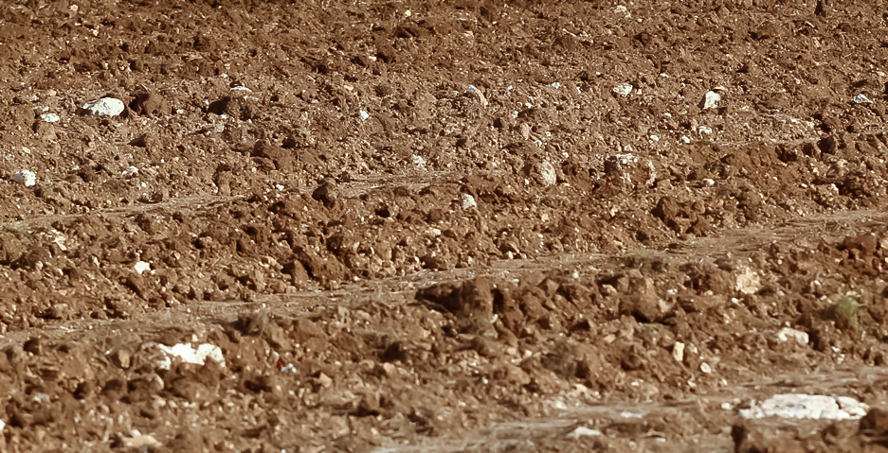
Nominating Our Employees Of The Month

son-alegre-ants-4

In life, one often tends to overlook the little things and yet, some of them can be of the utmost importance. Ants, for instance.

Ants are indispensable for the ecosystems. There are some 22,000 ant species known worldwide, it is said. We do not know how many of these one can find in Mallorca, but plenty there are if one bothers to look out for them. There are more ants on this island of Mallorca than humans, including the 12,000,000 plus visiting guests that Mallorca welcomes every year. A hundred times more. There may be more than that on our land alone, the Son Alegre finca.
son-alegre-ants-3

Ants form colonies that range in size from a few dozen predatory individuals living in small natural cavities to highly organised colonies that may occupy large territories and consist of millions of individuals. Larger colonies consist mostly of sterile, wingless females forming castes of “workers”, “soldiers”, or other specialised groups. Nearly all ant colonies also have some fertile males called “drones” and one or more fertile females called “queens”. The colonies sometimes are described as super-organisms because the ants appear to operate as a unified entity, collectively working together to support the colony.

(quoted from Wikipedia, thank you very much)

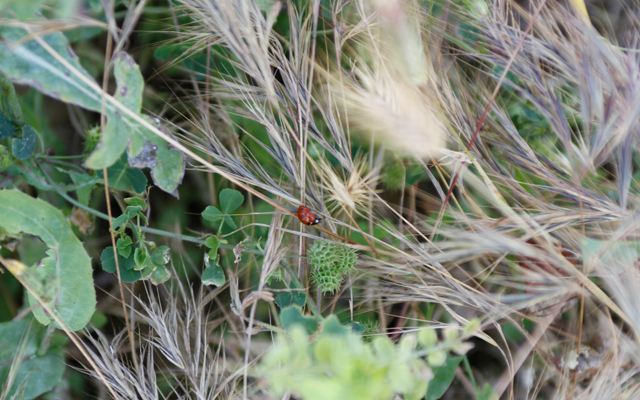
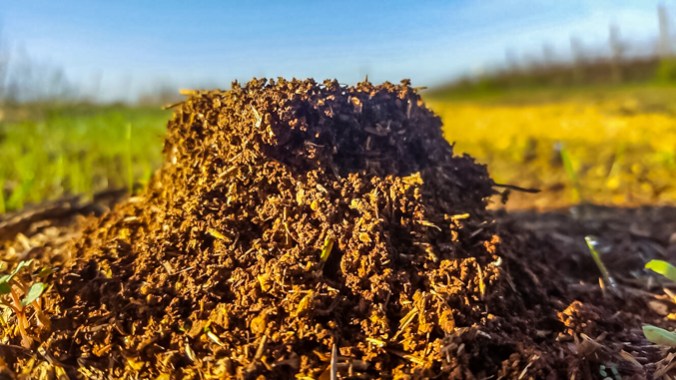
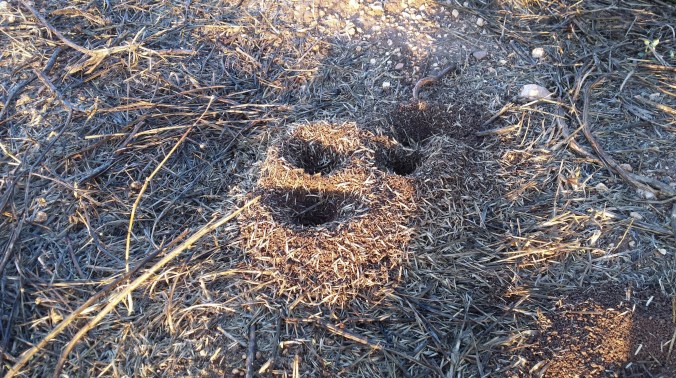
Our ants are working on our land day in and day out, all year long. Now, after this year’s grape harvest has been completed, they are coming out in force, building new nests and a plenitude of new mounds. Below the surface and far from the human eye, the ant colonies are very complex. There are some simple excavations of only a few tunnels and chambers, but there are also far more complex systems with many chambers of various sizes, and interconnecting tunnels. The environment within an ant nest is strictly controlled by the ants. They can open and close various entrances to provide more or less air circulation. The lower parts of the nest tend to be cooler and perhaps damper and ants will often move their brood from various parts of the nest if it gets too cool, too warm, wet or dry for the larvæ. This is why it is vitally important not to dig into an ant nest purely out of curiosity. We let our ants simply get on with their job of airing our soil and distributing organic matter to where it is most needed.
son-alegre-ants_01

Our motive is to let nature be undisturbed in the best possible way. The more we respect the holistic interaction of the microcosm of our vine plants with the native flora, often mistakenly called weeds, and their interaction with native insects, be that bees, ants, bugs or any other tiny creature, not to forget the Ladybird, the more thriving and healthy our grapes will grow. Nature always knows best.

Ants_Close up

Some interesting facts about ants you might be interested in:

  • Ants are extremely good at adapting to various climatic conditions as is evident by the fact that they are one of the longest surviving species. They have been around for the past 150 million years, and by the looks of it, seems like they are set for another 150 million!
  • Over 12000 known species of ants exist in the world. Experts conjecture that there are approximately 12000 species yet to be identified and named.
  • Ants are very intelligent beings. It is usual for humans to train animals, but in case of ants, it has been noticed that older ants train the younger ants in whatever task they are supposed to do. The only instance when an animal has been known to train another of its own kind!
  • A few species of ants have “trap-jaws” which can only be described as “super jaws”. These jaws can snap shut at tremendous speeds (records show 140mph!), in fact, the fasted amongst all animals. They use it as catapults, as well as to fling themselves in the backward direction.
  • Ants can run at amazing speeds. To give you an idea, if an ant was the size of a horse, it would be able to run as fast as a racehorse!
  • Some ants are given the job of looking after the queen’s eggs, and they do it diligently! Every morning these ants pick up the larvae and put them in the topmost chamber of the anthill to keep them warm, while every night they move them to the lowermost chamber so that they do not freeze!
  • When the queen ant flies off to start her own colony, she collects sperm from different males. She needs as many as 2 – 3 million sperms to start a new colony!
  • They are pretty colorful creatures. They appear in shades of green, red, and brown. Some species also exhibit blue and purple colors, while a few tropical ant species have a metallic shine.
  • Ants normally range from 2 to 7 mm in length. The carpenter ant is an exception to the rule, as it can stretch to 2 cm, or even an inch.
  • Adult ants are unable to swallow solid food. They depend on the juice they are able to squeeze out from pieces of food. This liquid food is also passed on to the larvæ.
  • Some worker ants are given the responsibility of guarding the queen. They act as the queen’s personal bodyguards.
  • One of the largest species of ant is the Giant Forest Ant (Camponotus gigas). The soldiers of this species grow as long as 28 – 30 mm. Also, the ants of this species engage in ritual battles which can continue for months!
  • An ant’s antenna is a multipurpose device. It can be used to touch things to know what they are, as well as to smell things!
  • So helpful are these creatures, that they eat for each other! Well, almost. They have two stomachs, one for themselves and the other to store food that they can share with other ants! They also have a tiny pocket in their mouths in which they can store food for other ants!
  • An ant has the largest brain amongst insects. It is said that the processing power of an ant’s brain and a Macintosh II computer might be similar.
  • It is the sting of the ant that is painful rather than the bite. Most ants have slightly venomous stings. Fire ants are most feared, because they have extremely venomous stings which can cause severe itching.
  • Ants are mostly omnivorous, that is, they eat other insects, seeds, oils and bread.
  • An ant can lift about 20 times its own body weight. But that is an average estimate. Some ants can even carry loads 50 times their body weight!
  • The life span of ants increases according to the hierarchy. Since the fertile males are at the lowest rung (their only job being that of providing sperm to the queen), they live only for a few weeks. Worker ants are a little higher up, so they live for 2 – 3 years. Queen ants live the longest, with a lifespan of almost 25 – 30 years!
  • Not all ant colonies have to have a queen. Some colonies function without one, while some others have more than one queen. If the queens do not think they can co-exist peacefully, one queen will leave the colony along with a few worker ants to start her own colony.
  • A Tropical Leafcutter ant uses its sharp outer jaw to cut leaves and make them into pulp. The pulp is later used to make fungus gardens. These gardens are looked after and harvested for food. So just to burst our bubble, we humans did not invent farming. Ants did it way before us.
  • Worker ants are further categorized into subsets based on the work they are allotted. Some are given the job of constructing the nest, some are given the responsibility of taking the rubbish from the nest and putting it into the rubbish dump, while some are supposed to teach the newer breed food gathering tactics.
  • Some ants (soldier ants) are given the task of guarding the nest, protecting it from predators, and warning the others about impending danger. These ants use the technique of vibrations to warn others. They will bang their heads against the walls of the nest, and the vibrations created because of the banging warn the others who are inside, about the approaching danger.
  • The soldier ants have modified heads to help them with their job. They can block the entrance to their colonies by putting their heads in them, and only allow their fellow worker ants to enter!
  • When a worker ant finds a source of food, it leaves a trail of scent to attract other ants in the colony to it. Since ants have poor vision, they rely heavily on this trail of scent to guide them to the food.
  • Leafcutter ants are threatened by a parasite which lays eggs in the crevices of their head. So what do they do when they go out? They carry smaller ants on their heads, whose only work is to fend off any attacks from this nasty parasite. Talk about looking out for each other!
  • Each colony of ants have their own unique smell. If an ant leaves it colony, it will lose the smell of that colony after a few days, and will be treated as an enemy if it returns after that. Any ant that does not have the smell of a colony will be treated as an enemy by that colony and attacked!
  • Leafcutter ants rank second only to humans, when it comes to forming intricate and huge societies. They can build 100 m wide nests in a matter of a few years! And they live in societies containing 8 – 10 million individuals.

(This information is quoted from www.buzzle.com. Thank you very much.)

We honestly don’t think we could run our land or our business without the good help of these little creatures, the ants, our little friends. Thank you all so much, little ants.

Illustrating The Son Alegre Grape Varieties

Monastrell

Last week, and just before the autumnal rains set in, we finished harvesting our grapes of this year’s crop. The way it looks, it has been a good year, it has to be said. At the moment, we grow six different grape varieties at Vinya Son Alegre, four red (blue) ones and two white (green) ones.

The image above shows the Monastrell grape, a Navy blue grape variety with a small and compact grain of a spherical shape, and with a distinct flavor. This grape was probably introduced to the Iberian Peninsula and Catalonia in particular by the Phoenicians around 500 BC. We use the Monastrell grape in our Sant Andreu Negre 2010 wine as well as in our Ca’n Sureda Petit Ropit Negre 2010.

Merlot

This grape is of the Merlot variety. The Merlot grape has a dark blue colour. The name Merlot is thought to be a diminutive of Merle noir, the French name for the Blackbird, probably in reference to the colour of the grape. The Merlot grape is used for our mono-varietal wines, Picarol Negre 2011 and Ca’n Sureda Merlot Negre 2010, as well as in our Picarol Rosat 2013 wine, our Es Pontàs Rosat 2013, our S’Antigor Negre 2012 (coming out soon) and our Ca’n Sureda Rosé Lucia 2012, which are all wines blended in combination with other grape varieties.

Syrah

This image shows the Syrah grape. The Syrah is a small-berried grape variety with a dark blue skin of an Indigo blue colour. The name Syrah originates from the areas of northern France. When it reaches perfect maturity, wine connoisseurs consider this grape as one of the greatest for wine. Perfect maturity is not easy to be reached with this grape. The Syrah grape is rather vulnerable; it can easily be harvested just a tad too soon or it will suffer when it is harvested a few days too late. We hope we have got it right this year; fingers crossed. We use this grape in our Sa Porta Murada Negre 2011 wine as well as in our Picarol Rosat 2013 and our Es Pontàs Rosat 2013 wines.

Cabernet Sauvignon

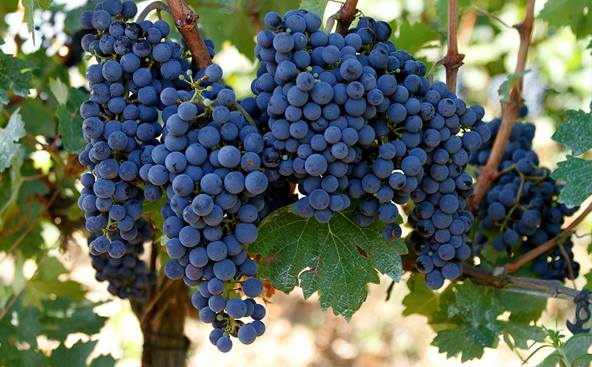
This image shows the Cabernet Sauvignon grape. Cabernet Sauvignon is a grape variety with a dark blue colour, almost Midnight blue, originating in the French region of Bordeaux. The plant is vigorous and well suited for warm climates with relatively low humidity. Cabernet Sauvignon is most widely distributed throughout the world among a diverse spectrum of climates. The Cabernet Sauvignon grape is used in our Picarol Rosat 2013 and our Es Pontàs Rosat 2013 wines, as well as in our S’Antigor Negre 2012 and our Ca’n Sureda Rosé Lucia 2012 wines.

We are preparing to plant vines of the Callet grape variety early next year, an indigenous grape variety of Mallorca and in particular of the Felanitx and Santanyí region. We will show you photos of the Callet grape as soon as it will be grown and ripened, probably not before 2016. Patience and victory are twin brothers, for victory comes with patience.

Malvasía

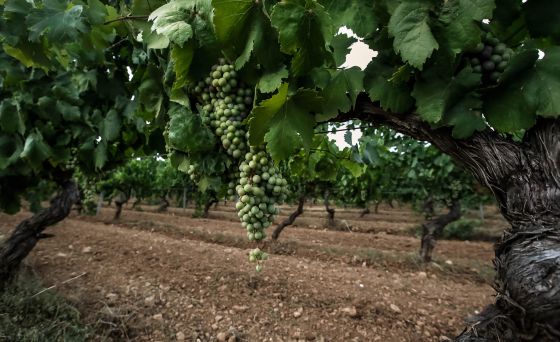
This photo shows the Malvasía grape. Our Malvasía grape is the Balearic variety of a green grape historically used to make dessert wine due to the presence of some residual sugar. The Malvasía grape is said to be of ancient Greek origin. There is also a red Malvasía negra grape variety but we do not grow that one (yet). We use the Malvasía grape for our Picarol Blanc 2013 and our Es Pontàs Blanc 2013 wines, as well as our Ca’n Sureda Blancs 2012.

Chardonnay

The image above shows the Chardonnay grape. Chardonnay is a green grape variety with origins in the Burgundy region of eastern France, giving the wine a medium to light body. The grape is small and round and acquires a melon tone when fermented. The Chardonnay grape is used in our Picarol Blanc 2013 and our Es Pontàs Blanc 2013 wines, as well as our Ca’n Sureda Blancs 2012.

Earlier this year, we planted vines of two more green grape varieties, the Giró ros grape, another autochthonous grape variety of Mallorca as well as the Viognier, a white grape originating in the Rhine valley, especially in the department of Rhone (France). We will be able to show you photos of these two grapes in the autumn of 2015. The vines are doing well at the moment; the have taken root and are doing fine, but the grapes have not developed yet.

All photos shown above were taken by our friend and collaborator, John Hinde, as were in fact most of the photos used on this blog. Thank you, John.

The texts of this blog have so far always been written by Klaus Fabricius, just in case you wanted to know.

Picking The Merlot Grapes

Merlot

For the last two days, we have been busy picking our Merlot grapes at Vinya Son Alegre. This is a blue grape variety. Wine made from the Merlot grape is characterized by its fineness and softness while being aromatic and almost meaty. The Merlot grape comes with a cylindrical bunch of small, sparse berries. Their grain is small and thick-skinned, with a blue-black color, and the pulp is sweet. This grape belongs to the same family as the Cabernet Sauvignon variety. Today I will leave you with a picture where you can see how the Merlot grapes are being selected before going to be pressed.

Merlot selection

A Boom of Vineyards, Wines and Wineries

The following article was written by Andreu Manresa, a friend of mine from Felanitx, and published in La Crónica de Baleares, El País Cataluña, July 20th, 2014. © All rights remain with EDICIONES EL PAÍS S.L.

Boom de viñas, vinos y bodegas. La ola vitivinícola se agiganta en Mallorca gracias al capital internacional, de mayoría alemán, y los buenos réditos del turismo.

Tolo Ramon_El País

Ocurre un boom vitivinícola. En Mallorca se hacen nuevas plantaciones de viñedo, algunas enormes para la escala tradicional. Hay cultivos en los que no se alcanzan a ver sus límites. Los de la payesía del XX son dispersos, trozos, porciones aquí y allá. Era la estrategia defensiva de pequeños propietarios temerosos por la ruina de sus abuelos con la filoxera.

Aparecen ahora cientos de vinos de etiquetas de bodegueros o gente ajenos a la tierra. La nueva tendencia se constata en la construcción de más bodegas, hasta más allá de las 70 registradas.

El capital internacional – alemán – y el turístico fluyen hacia ese teórico negocio que da prestigio y ego pero que requiere inversión, ojo, tino, años y suerte en las cosechas. Un magnate de la cosmética, Andrea Schwarzkopf, posee una gran finca y celler en Pollença, can Axartell, de cuatro plantas soterradas en una cantera de yeso. Son seis millones invertidos en la obra.

Alrededor del corazón de Binissalem surgen más lagares foráneos: en son Juliana, Ana Vins; en Son Artigues, en Porreres, el alemán Marc Gayda cosecha vinos. Los Castell Miquel de Alaró son de Michael Popp, de Binorica, que se hizo con la finca sa Canova de la ex Sa Nostra. El dueño de la cadena de perfumerías y del golf de Canyamel, Erwin Franz Müller, produce caldos en Capdepera y los vende. En Banyalbufar se da el milagro de tres microbodegas de la malvasía resucitada.

Clásicos y familiares son los Mollet-Montenegro de Sunyer y la factoría Binigrau de Sencelles. En Felanitx, Armero y Vidauba exhiben sus retos, como Miquel Oliver, de Petra, los dos Gelabert de Manacor, los dos Galmés de centro insular, Jaume de Puntiró, los Butxet, son Prim, Pastor, son Puig, son Bordils, los Mortitx y Vidalet… dispersos y distintos todos, algunos con fondos colectivos.

El señorío lo proclama OM de Algaida, diferente de la matriz de can Ribas de Consell, los Nadal o los rústicos de can Majoral. Las redes y el capital de sus distribuidoras de cervezas y licores dan vida a los lagares enormes de Tianna Negra de Morey, en Binissalem, y Sa Rota de los Bordoy, en Llucmajor.

La pequeña Alemania está en Es Fangar, capitalismo cerrado de producción ecológica de Peter Eisenmann, que gasta otros 6 millones en una bodega, alejada del latifundio de 1.000 hectáreas, de las que 64 son de viña.

La cabecera de las plantaciones alemanas con bodega es Binigual, del fallecido potentado Klaus Graff que creó Teka y Puerto Portals y confió a los jóvenes roqueros de Ànima Negra (AN) el dar personalidad a sus vinos. El fenómeno de AN de Miquel Àngel Cerdà y cía. se explicará por el triunfo de otro vino, el del terroir —con la fachada de las etiquetas de Barceló— y su capacidad de generar emuladores. Una secuela exitosa es la bodega de 4 Kilos, la escisión del enólogo Xesc Grimalt, que no ara las viñas y deja que las raíces de las hierbas aireen el suelo y compitan con las de las cepas. 4K lanza vídeos estrafalarios y buenos productos enigmáticos.

La nueva ola del vino no es secreta. Hay movimientos de terrenos que cambian cuadrículas enteras de la geografía y del mapa en el satélite. Así nació y se duplica la viña gigante en sa Bassa Plana, de los hermanos Miguel y Toni Pascual, de Binissalem, que hicieron su fortuna sirviendo copas a alemanes y poseen la cadena hotelera Pabisa. En Cala Pi, área protegida, tienen ciervos, desforestan garriga, trituran piedras y rellenan su nuevo paisaje de vides.

En Santa Maria, los hijos americanos de Andreu Gelabert, del hotel de Sóller, tienen vinos Ángel, y los de son Ramon, en Llubí- Muro, son de Ramis, de Grupotel. En Santa Catarina, de Andratx, persiste la bodega creada en 1985 por un millonario sueco.

La bodega Macià Batle – valorada en 20 millones -, con un millón de botellas al año y Ramon Servalls al frente, sigue en manos de Sebastián Rubí tras vender un hotel. Otros megaproductores son Pere Seda, de Manacor, y José Luis Roses Ferrer, de Binissalem, los exFranja Roja, con 80 hectáreas y 700.000 botellas. Mallorca da seis millones de litros año.

Solitaria y vehemente, Bàrbara Mesquida Mora estrena su nueva bodega en cuarta generación en Porreres con otra marca, vinos biodinámicos, estéticos y literarios. Aumenta la escritura a rayas de la isla con el orden de los viñedos. Al sol del estío, las vides ofrecen uno de los escasos verdes que resisten vivos.

Harvesting Some Blue Grapes

Cabernet Sauvignon_1

All week this week, we have been busy at our Son Alegre finca harvesting our grapes. On Monday and Tuesday, we were busy harvesting our Malvasía grapes. Wednesday, it was time for our Chardonnay grapes, and yesterday we were busy harvesting our blue Cabernet Sauvignon grapes. The Cabernet Sauvignon grape is of a medium size; it is of an irregular shape and not very compact. Its grains are small and spherical, and filled with quite a few seeds. The skin is thick and hard, making the grapes resistant to diseases, and the grape has a deep blue colour. The grapes’ flesh is firm and crisp wit a slightly acidy taste. We use this grape together with our Merlot and Syrah grapes to blend our fantastic rosé wines. Cheers.

Cabernet Sauvignon_2

Meeting Our Most Valuable Helper, The Ladybird

Ladybird

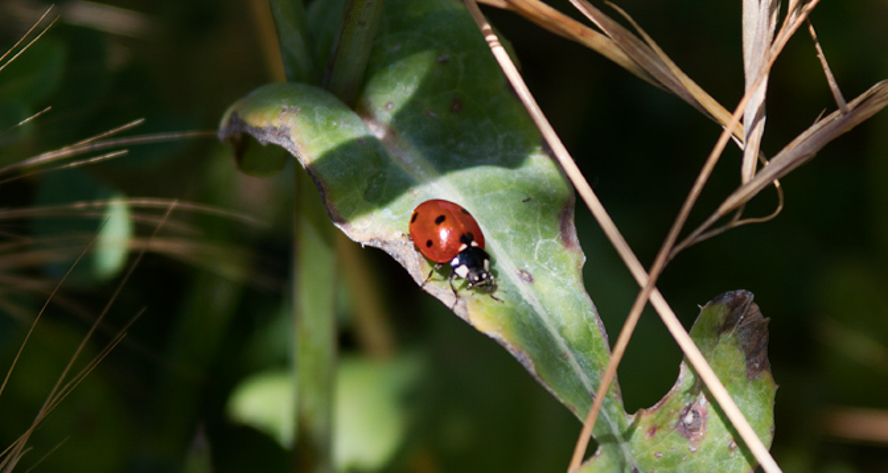
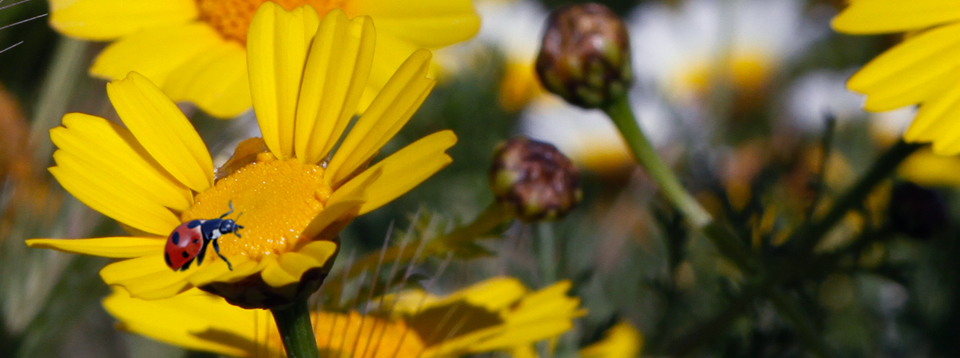
There is a debate as to what might be the most important bird, insect, beetle, animal or other living organism in a wine growing agricultural land such as ours at Vinya Son Alegre in Santanyí (Mallorca). There is no doubt that we could not do without the honeybee (Apis mellifera), the ant (Formicidae) or the earthworm (Hormogastridae), but truthfully, we would be out of business or rather, out of grapes if it were not for the Ladybird or Lady beetle (Coccinellidae). Honest.

Ladybird Coccinellidae (John Hinde)

You see, at a farm where the land is cultivated under biodynamic principles and where the fruit, in our case the grape, is grown under organic conditions, you will suffer, like it or not, from certain pests, such as lice, moths, parasites or similar. That’s why most vineyards in Mallorca, or certainly a great many of our competitors employ pesticides or other chemical agents to combat such potential harm or mischief.

ladybird (John Hinde)

We, instead, employ an army of Ladybirds or, as we call them here, Mariquitas (Spanish) or Marietes (Catalan). Our little helpers actually eat these harmful pests, or rather, eat their eggs before they even hatch. Each single Marieta can eat up to 200 eggs of small lice or moth or other parasites. 200 eggs, imagine. Assume a figure of 1,000 Ladybirds in our army and you’ll have 200,000 unborn lice, per day. No wonder that our vines are doing so well, lately; we can’t complain.

For more information about our wines, please visit our new website, Vinya Son Alegre. It is ready now in English, and about to be completed soon in German, Spanish and Catalan. It’s a lot of work, doing a website in four languages simultaneously, but there you go. Our little Ladybirds never complain, so, we’ll refrain from making a fuss, just the same.

Introducing The Chardonnay Grape

Son Alegre Chardonnay

The Chardonnay grape is widely distributed amongst Mallorca’s vineyards. This grape variety is probably the world’s most popular white wine grape and it is grown in virtually every wine-producing region. Even though this white grape is not autochthonous to Mallorca, it was certainly grown here successfully in 1870-80 when the Austrian Archduke Luis Salvator wrote his treatise, Die Balearen, listing the Chardonnay grape together with 38 other grape varieties grown here in the Illes Balears.

Son Alegre Malvasía

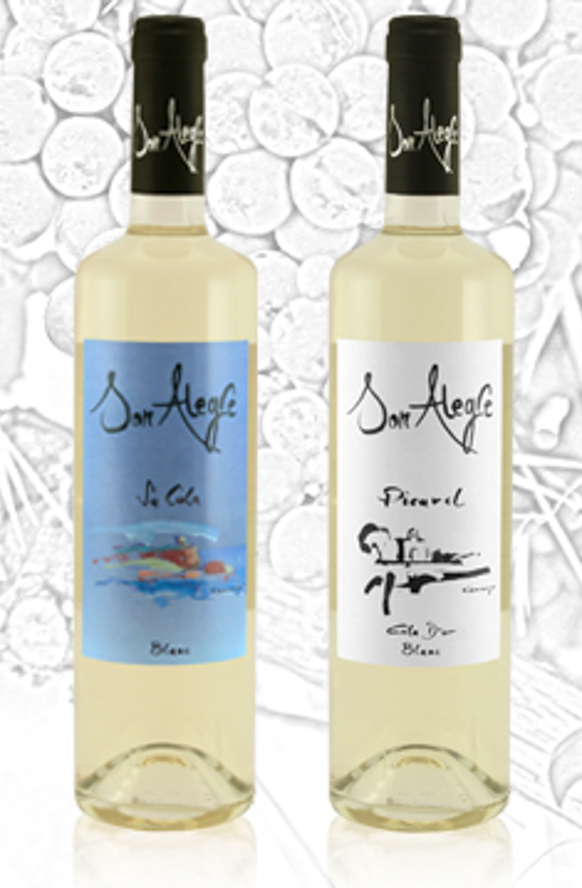
The Chardonnay grape in general produces wines which are dry to medium dry with pear, apple, tropical or citrus fruit flavours. When little to no oak aging occurs, Chardonnay tends to be more crisp and fresh. With extensive oak aging, the wines become creamy and buttery with vanilla, spice and oak flavors. Our two Son Alegre white wines, Sa Cala and Picarol Blanc, are made with Chardonnay and Malvasía grapes. Both wines are fresh and refined, in perfect balance of acidity, alcohol and fruity expression; they were not aged in oak barrels.

Reviving Winemaking In Santanyí

Naturalis Historiæ

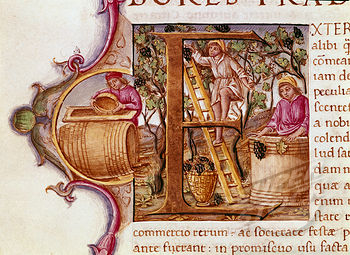
Mallorca has a long standing tradition of wine making. It is said that the Romans brought vines with them and planted these, as they have brought so many other things.

In his treatise of Naturalis Historiæ (Natural History), Gaius Plinius Secundus (23 – 79 AD), better known as Pliny the Elder, elaborated on Mallorca’s œnological efforts and the art of wine making. He stated quite categorically that the island’s wines were equal to the best wines of Italy, his home country. 

1899-43248

When King Jaume I conquered the island in 1229, Ben Abbad reportedly gave the invading king grapes of excellent quality.

In the region of Santanyí, wine was grown as early as the 13th century. During the 1880s, some 580 cuarteradas of land (approx. 420 hectares) were cultivated with vines. Sadly, the phylloxera pest, brought on by a mean vine-eating beetle, destroyed virtually all of Mallorca’s vineyards, devastating the ones in Santanyí as well, at around 1893-8.

At Vinya Son Alegre, we planted new vineyards in 2004 and produced our first wines in 2008 for sale in 2010. Ours is the first wine from the Santanyí region in over 100 years.

We currently offer three white wines, three rosé wines and six red wines. Please consult the Son Alegre website for further information.

2+2+4Bottles

Collaborating With Armero i Adrover In Felanitx

barriques

At Son Alegre, we are in the process of planning to build our own winery to be located in the village of Calonge. Until the time of its inauguration, we are using the facilities and the expertise of our good friend Luis Vicente Armero González of the Bodega Armero i Adrover in Felanitx to macerate, ferment, blend and produce our Son Alegre wines. This collaboration began in 2008 and we are proud of what has been coming to the market since then. We are deeply grateful to Luis Armero and his set-up for the work and enthusiasm given to our wines, combined with their devotion and tireless passion.

Their family-owned company was founded in Felanitx in 1992 by Luis Armero and his wife, Antonia Adrover. Before setting up their own company, Luis Armero already came from the world of winemaking, while Adrover’s family had owned vineyards in the Felanitx area for years. They are considered as pioneers in contemporary Mallorcan wines of present day. The company is highly respectful of the environment; their work and production are governed by environmental considerations.

At the Armero i Adrover winery, stainless steel maceration vats are employed calculated to macerate the grapes from each plot of land with a capacity of 6,000 litres and smaller ones of 3,300 litres, both featuring an internal temperature control system.

Armero i Adrover employs American and French oak barrels for the aging of their red wines.

stainless steel vats

The Soil Determines The Wine

a89ed6_6bcc3d61b9a346f49650756a78fa03d0

When evaluating a wine, the choice of grape variety is perhaps of secondary concern. One distinguishes the primary aroma of the grape variety from the secondary aroma, which depends on the type of soil on which the vines grew. Often it is not the choice of the grape varieties that makes a wine taste the way it does, but rather where those grapes are grown, the microclimatic conditions in that particular location and the type of soil makeup giving nourishment to the vines.

At Son Alegre, we cultivate 15 hectares of vines on two sites, one on the edge of Santanyí in the area between Son Danus and Ses Angoixes, and the other in the nearby area of Can Taconer on the outskirts of Calonge. Both vineyards benefit from the Serra de Llevant’s moderating impact on climate as well as from the thermal conditions of the coastal area, at 7 km from the Mediterranean Sea to the South-East and 12 km distant from the West.

The particular meteorological conditions of our land effectively present us with average temperatures of one to two degrees Celsius lower than comparative terrains further inland. This is due to cooler air coming in from the sea, a phenomenon known locally as s’Embat. This cool current of air is created by meeting with warmer air, heated up from the land warmed up by the high temperatures of the sun and thus regularly creating a fresh breeze of air during the hot afternoon hours of summer.

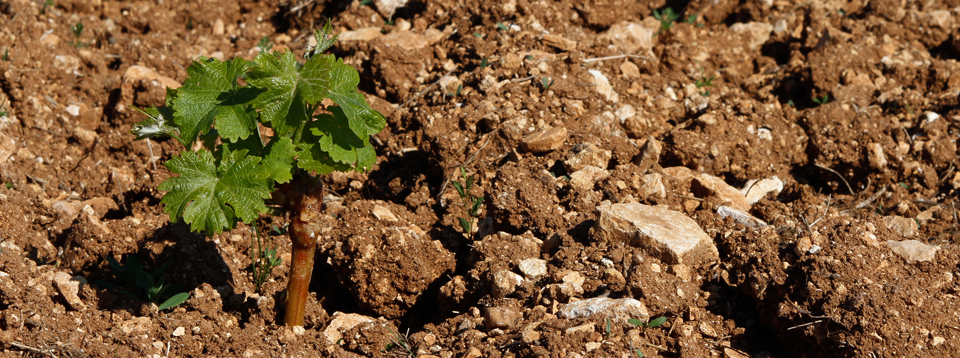
Another shared aspect of the terroir at both of our sites is the Call Vermell soil, a clay loam formation containing plenty of iron oxide and lime. Our land is also interspersed with plenty of stones, characteristically preserving humidity that little bit longer than soil of a different makeup.

Wine growing for us is an on-going opportunity to accommodate our fascination with the wonderful complexity of the natural world. We employ classic methods of hands-on viticulture and oenology by practising only hand-harvesting, traditional basket press production, indigenous wild yeast fermentation, and fine French oak barriques for aging.

Son Alegre soil -1

Being Proud Of Our Ancestors

Son Alegre bisabuelos -1

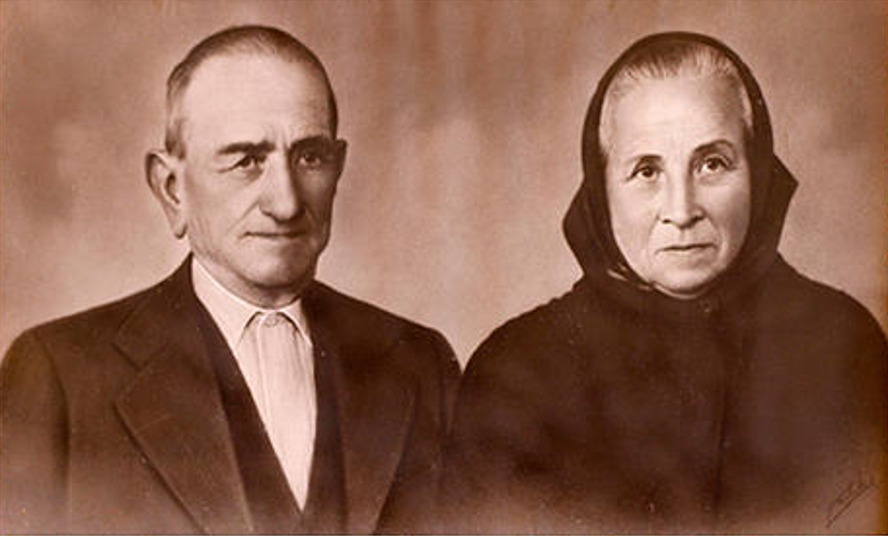
Antoni Manresa and his wife Maria Capó were our great-grandparents. They were simple farmers. They practised agriculture the organic way, because that was the way agriculture was done in those days anywhere in Mallorca; there was no other option. Then, working the land was done according to biodynamic standards too because it was generally done this way on the island.

In the late nineteenth century farming was based on the phases of the moon, as was the way of life in general. The land was cultivated according to the season and always with respect for nature. For a farmer at that time there simply was no alternative. What was normal then, of course, unfortunately was lost over time due to so-called progress, and because that is what the multinationals wanted for their own benefit.

It may be time to evaluate what we have been given by our ancestors and learn from them to be in harmony with nature and in tune with the natural rhythm of life.

Presenting Our Son Alegre Video

Son_Alegre_Video

Son Alegre Vinicultors is dedicated to growing grapes in harmony with nature. In our video we show the fauna and wildlife of our land. Our deep regard for nature rewards us with a truly beautiful harvest, not every year perfect but always true to the land. For this we are truly grateful.

Our wine is made with the help of nature. Nature is always our inspiration. At Son Alegre we always work according to biodynamic principles.

We are proud to present our new video Beautiful Son Alegre.

http://www.youtube.com/watch?v=Y6o8Uwse55E