Reviving Winemaking In Santanyí

Naturalis Historiæ

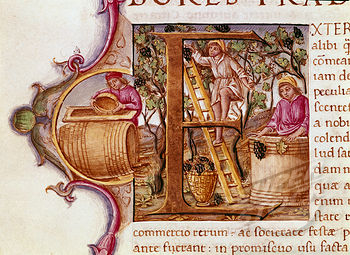
Mallorca has a long standing tradition of wine making. It is said that the Romans brought vines with them and planted these, as they have brought so many other things.

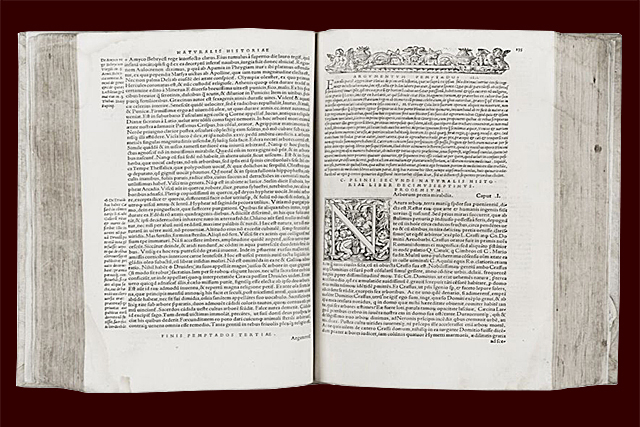
In his treatise of Naturalis Historiæ (Natural History), Gaius Plinius Secundus (23 – 79 AD), better known as Pliny the Elder, elaborated on Mallorca’s œnological efforts and the art of wine making. He stated quite categorically that the island’s wines were equal to the best wines of Italy, his home country. 

1899-43248

When King Jaume I conquered the island in 1229, Ben Abbad reportedly gave the invading king grapes of excellent quality.

In the region of Santanyí, wine was grown as early as the 13th century. During the 1880s, some 580 cuarteradas of land (approx. 420 hectares) were cultivated with vines. Sadly, the phylloxera pest, brought on by a mean vine-eating beetle, destroyed virtually all of Mallorca’s vineyards, devastating the ones in Santanyí as well, at around 1893-8.

At Vinya Son Alegre, we planted new vineyards in 2004 and produced our first wines in 2008 for sale in 2010. Ours is the first wine from the Santanyí region in over 100 years.

We currently offer three white wines, three rosé wines and six red wines. Please consult the Son Alegre website for further information.

2+2+4Bottles

The Soil Determines The Wine

a89ed6_6bcc3d61b9a346f49650756a78fa03d0

When evaluating a wine, the choice of grape variety is perhaps of secondary concern. One distinguishes the primary aroma of the grape variety from the secondary aroma, which depends on the type of soil on which the vines grew. Often it is not the choice of the grape varieties that makes a wine taste the way it does, but rather where those grapes are grown, the microclimatic conditions in that particular location and the type of soil makeup giving nourishment to the vines.

At Son Alegre, we cultivate 15 hectares of vines on two sites, one on the edge of Santanyí in the area between Son Danus and Ses Angoixes, and the other in the nearby area of Can Taconer on the outskirts of Calonge. Both vineyards benefit from the Serra de Llevant’s moderating impact on climate as well as from the thermal conditions of the coastal area, at 7 km from the Mediterranean Sea to the South-East and 12 km distant from the West.

The particular meteorological conditions of our land effectively present us with average temperatures of one to two degrees Celsius lower than comparative terrains further inland. This is due to cooler air coming in from the sea, a phenomenon known locally as s’Embat. This cool current of air is created by meeting with warmer air, heated up from the land warmed up by the high temperatures of the sun and thus regularly creating a fresh breeze of air during the hot afternoon hours of summer.

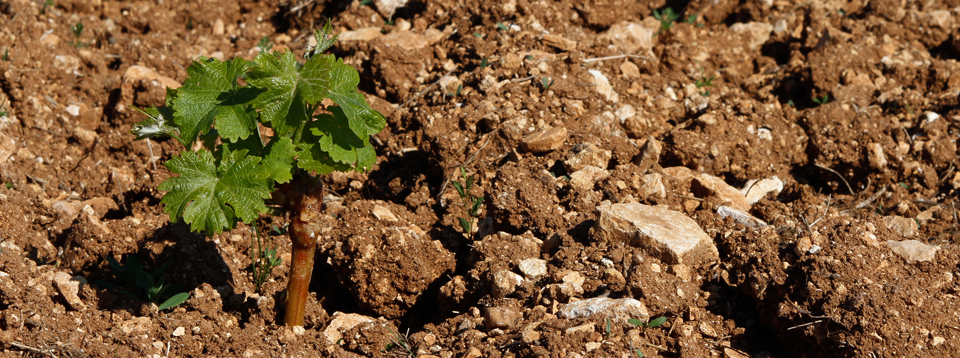
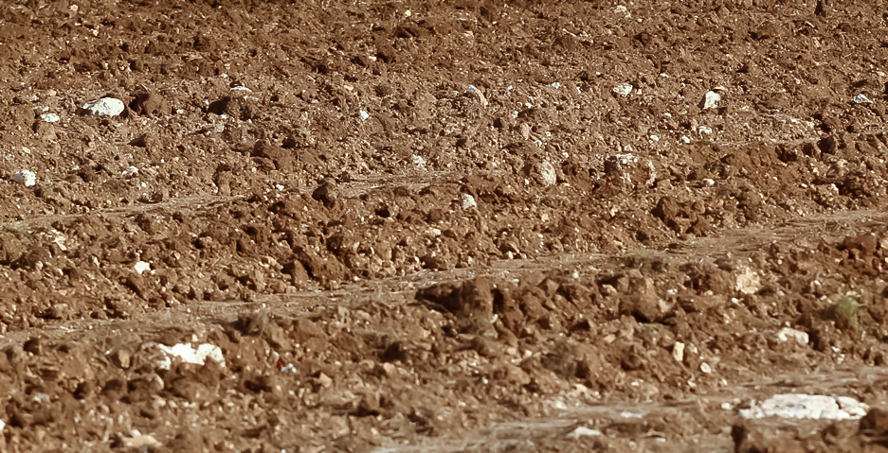
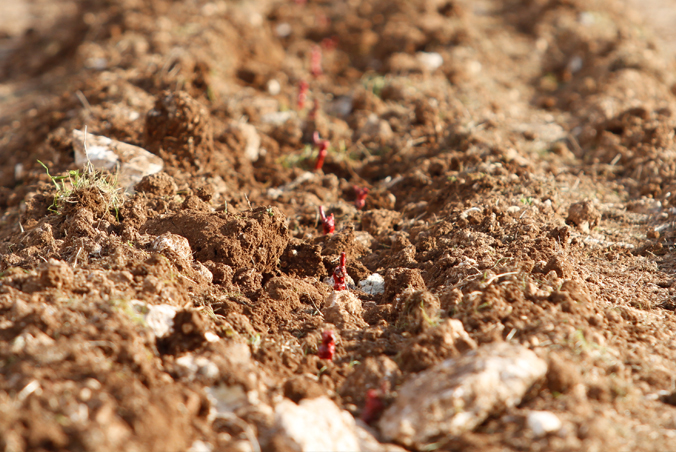
Another shared aspect of the terroir at both of our sites is the Call Vermell soil, a clay loam formation containing plenty of iron oxide and lime. Our land is also interspersed with plenty of stones, characteristically preserving humidity that little bit longer than soil of a different makeup.

Wine growing for us is an on-going opportunity to accommodate our fascination with the wonderful complexity of the natural world. We employ classic methods of hands-on viticulture and oenology by practising only hand-harvesting, traditional basket press production, indigenous wild yeast fermentation, and fine French oak barriques for aging.

Son Alegre soil -1

Being Proud Of Our Ancestors

Son Alegre bisabuelos -1

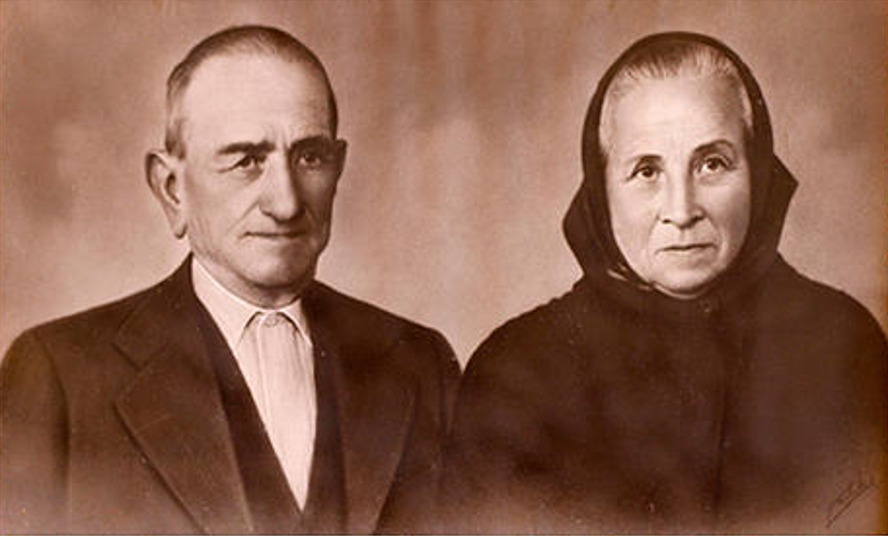
Antoni Manresa and his wife Maria Capó were our great-grandparents. They were simple farmers. They practised agriculture the organic way, because that was the way agriculture was done in those days anywhere in Mallorca; there was no other option. Then, working the land was done according to biodynamic standards too because it was generally done this way on the island.

In the late nineteenth century farming was based on the phases of the moon, as was the way of life in general. The land was cultivated according to the season and always with respect for nature. For a farmer at that time there simply was no alternative. What was normal then, of course, unfortunately was lost over time due to so-called progress, and because that is what the multinationals wanted for their own benefit.

It may be time to evaluate what we have been given by our ancestors and learn from them to be in harmony with nature and in tune with the natural rhythm of life.

Comprehending The Health Of Our Planet’s Ecosystems

rabbit_hole

Understanding the health of our planet’s ecosystems is the holistic understanding of agricultural activities in the long term period.

At Son Alegre, we cultivate our vines according to biodynamic principles, the holistic way of understanding the interaction of our soil with wildlife and insects that allows us to reconnect with nature.

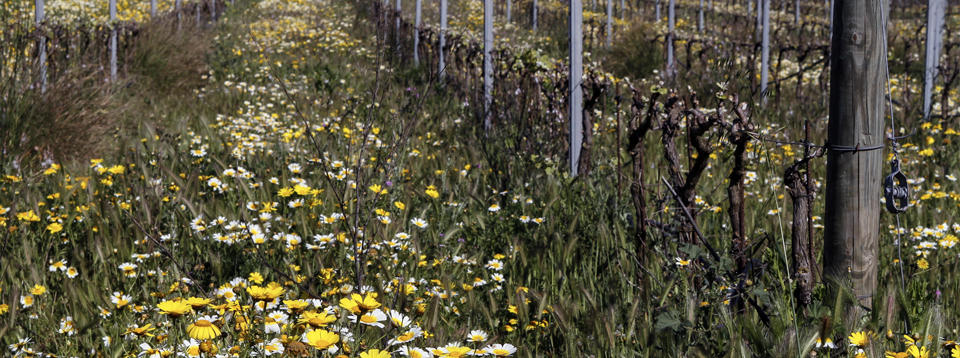
To this end, we do not plough our vineyard with heavy machinery. We use biodynamic compost produced from the remains of grapes and other herbal and mineral components plus our own organic manure. We allow a vegetable cover all year round. We carry out pruning according to the lunar calendar. We perform all the tasks in the vineyard by hand. We refrain from the use of chemical pesticides, herbicides and fertilizers of any kind. We reduce, by more than 80%, the permitted doses of copper and sulfur used to prevent mildew. We use infusions of medicinal plant substance to prevent diseases.

In short, we simply allow nature to do its integrated and holistic task even if it leads to lesser quantities and a lower profit margin. Our respect for nature has so far regularly given us a good harvest. It may not always be perfect, but it is always in accordance with our sanity, health and peace of mind.

We want our soil to remain of good use for our future generations. We aim to give back to nature what nature has given us forever more.

Soil_closer

A Field Without Trees Is Like A Plant Without Flowers

Son Alegre_new field

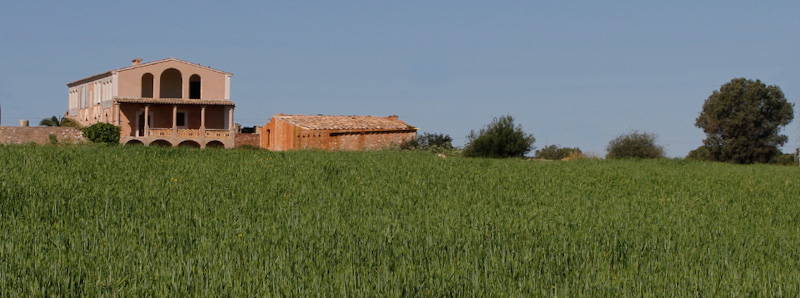
Son Alegre as a finca used to be a dairy farm. During the Eighties, the finca was sold to a German group of investors who wanted to convert the fertile land into yet another project of investment and applied for planning permission for an urbanization. Thanks to Miquel Manresa from Calonge, the land has since been converted into a hortus of organic farming.

Son Alegre_sheep

Since when do you run Son Alegre?

I bought Son Alegre in about 2002 from some Germans who wanted to create an urbanization with 20 parcels of individual properties, which luckily did not go down well with the authorities. Before that, an almond plantation existed here and for the last 20 years, Son Alegre was a dairy and sheep farm.

What did you plant there?

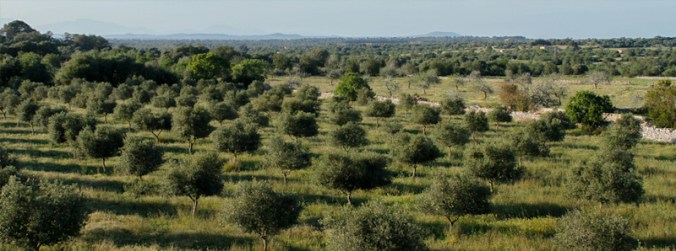
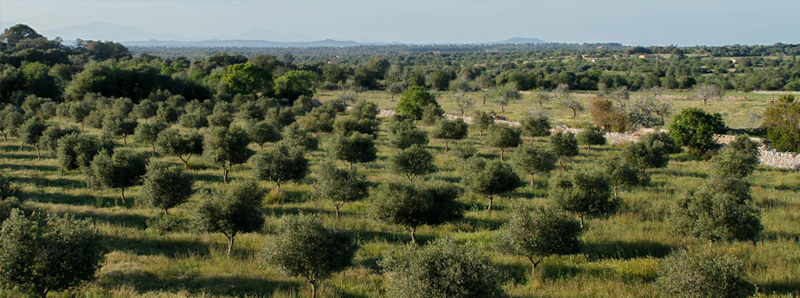
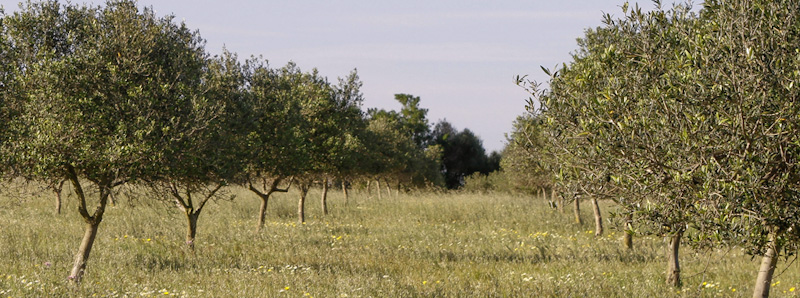
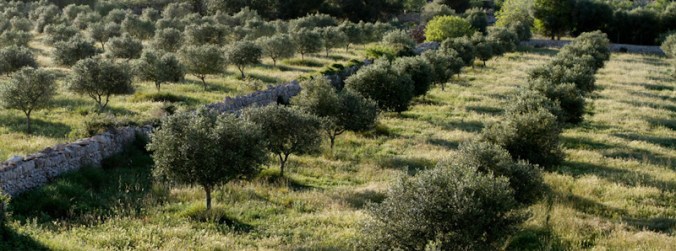
Land without trees is like a plant without flowers. I planted a vineyard as well as olive and carob trees. I wanted the trees to do well and for that I planted them in the traditional Mallorcan 8×8 pattern. I had the idea to create ​​a small forest of trees that would eventually allow the land to become self-sufficient: our experience of the land would be what is inside of us.
Son_Alegre_Xeixa

Had you been a farmer?

I was born into a peasant family in Calonge (Santanyí). But for the first 16 years of my professional life I worked in tourism. Then I realized money was not everything and that I wanted more quality of life. My idea is that by the time I am gone I will have helped create a space that would be beneficial for our society.
Olives_3

What type of vineyard did you create?

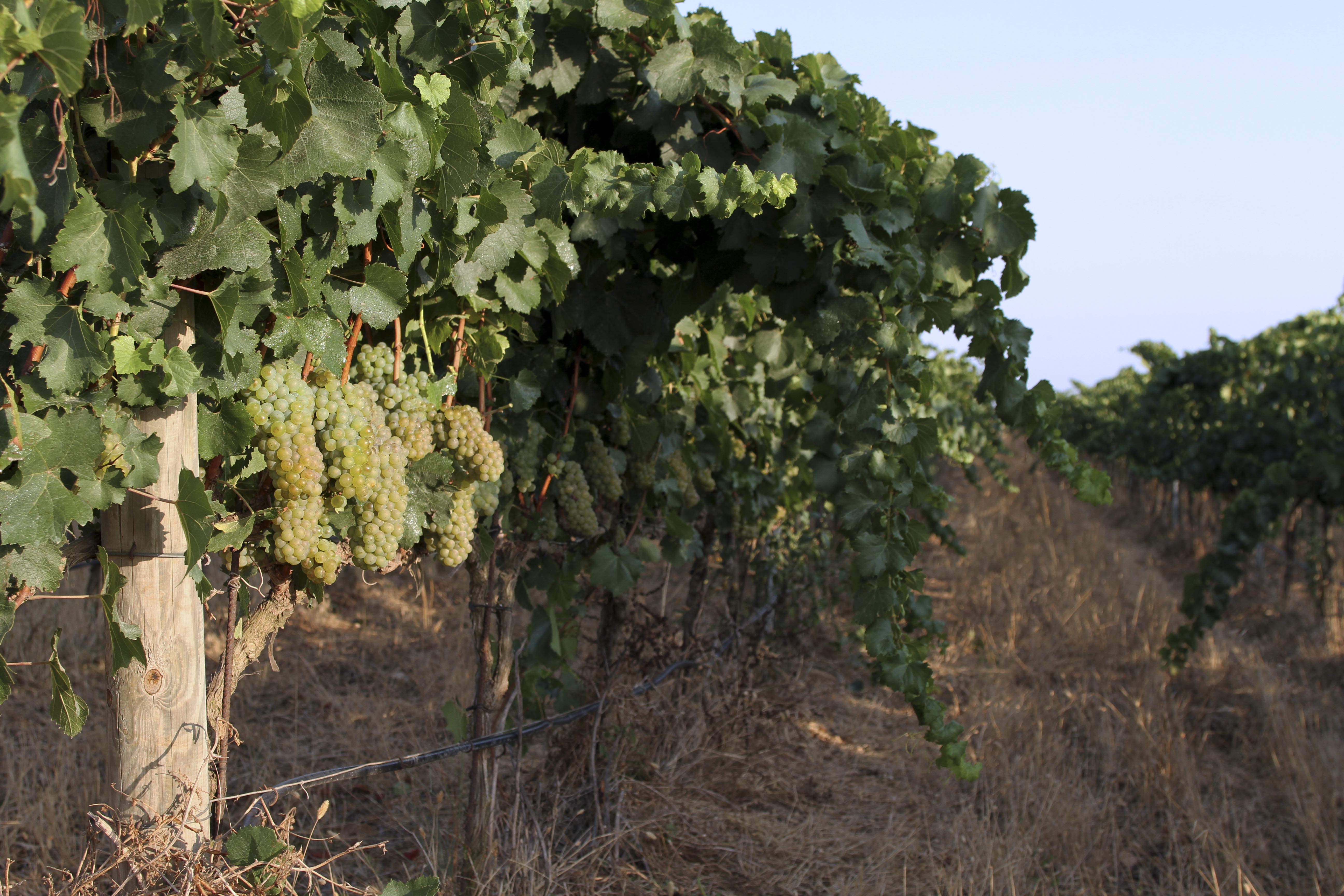
So far, I have planted 3 hectares of red grapes, Cabernet Sauvignon, Merlot, Syrah and Petit Verdot, together with some white grapes, Chardonnay and Malvasía. In the near future we want to plant Callet as well as some other native varieties. This year we have started to make our wines with the bodega of Armero i Adrover in Felanitx.

Son Alegre_Vineyard

What else have you done?

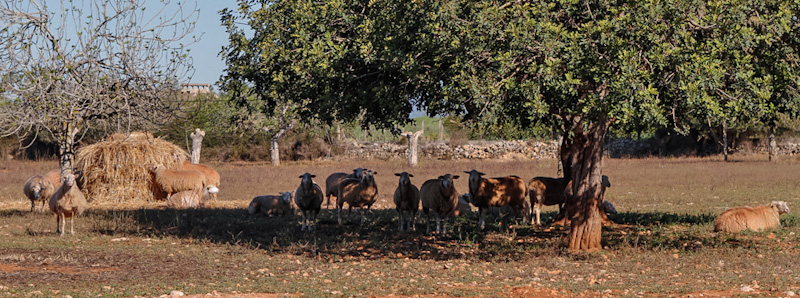
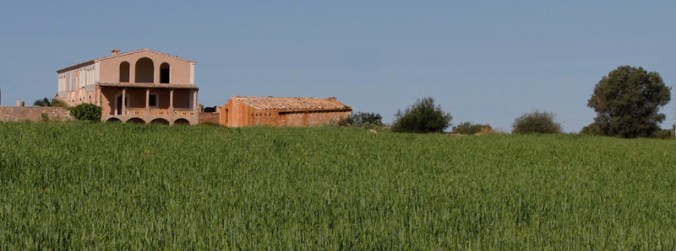
Alltogether, our estate has 51 hectares and we want to continue to plant more olive trees and some more vines. We also have some 60 sheep and a dozen Mallorcan goats. Everything is organic. We have sowed Santanyí Xeixa wheat and some barley and legumes as our own natural animal feed.

How are your olives and how is your olive oil?

The olives are of the Arbequina variety and I have started to produce some virgin olive oil. This year I began to bottle the Sileo‘ olive oil which comes from the Latin phrase Sine Sole Sileo, which is found on our sundial meaning Without the sun, I am silent.Without the sun there is no life.

960x358_oliveGroveS

Has it been easy to make this product?

It actually takes a lot of work to make oil. We have planted olive trees on 6 hectares of land and have harvested 10,000 kg of olives to yield no more than 1,100 litres of oil. One either goes for volume or one aims for quality. The olive harvest has to be done at its best moment. It is quite hot here in Mallorca and by mid-October the olives would normally be ready to be harvested, but then the olive is still too water-logged. The later the crop is harvested the better the yield, but then then there comes the risk of more oxidization and more acidity. We tried to make an olive oil of low acidity, fully aromatic and very fruity.

Have you had any problems with pests of any kind?

Mallorca is one of the places where it is difficult to grow olives organically because of the olive fly. We tried to combat the fly with bottles of Diammonium phosphate. With that we caught quite a few flies. During the flowering period we used Kaolin (a soft white clay) which has some effect on the fly. During the night, we washed the leaves with a natural product and if the fly is harmed by this it dies, but the following day the product no longer has any effect. This way, we try to protect our crop, but it requires a lot of work.

Son Alegre_Olives

How do you see agriculture in Mallorca?

Mallorca is like a big garden. In spite of everything Mallorca is a massive orchard. Hoteliers should see that because we are all sitting in the same boat. If this garden would no longer exist there would not be nothing at all. It would be important if some of the resources generated by tourism were reinvested in the land. By the time our products reach the end consumer there is, all too often, no margin left for the producers. The farmers of Mallorca have disappeared because parents wanted their children to go off to do different things. Now we have a land devoid of people, and this proves to be wrong and we have to change.

Son Alegre_vines

What can we do to change all this?

There are 12 million people coming to Mallorca every year and still, we cannot sell our almonds to them. With the almonds we could do so much and with the carob too. We have become too entangled. We have no sense of valuing what we have and where we live. And we are surrounded by a garden. If only we could sit in a plane and see our island from above us, we would marvel and value this land. Tourism has to join forces with the rural world and its products. That is the solution to revive farming and the land.

vines_margaritas

What do you think of public subsidies?

In the absence of any general profitability of farming land, some form of public funding would encourage young people to stay on and work the land. This could fulfill an important function. The future of the our land is in the hands of young people, and some financial incentive would allow young farmers to get ahead of the game.

(The above article is from an interview with our Miquel Manresa, held by Mateu Morro for dbalears.cat, April 2nd, 2011)
Cultivating the Malvasía Grape

Malvasía grape Vinyes Son Alegre

Vinyes Son Alegre is one of only a few vineyards growing the Malvasía grape variety. Historically, this grape has only been grown in the Mediterranean region, the Balearic Islands, the Canary Islands and the island of Madeira, but now it is tended to in many other wine-making regions of the world as well, such as Italy, Slovenia, Croatia, Corsica, the Iberian Peninsula, California, Arizona, Australia and Brazil. In the past, Malvasía wine was predominantly consumed as a sweet dessert wine similar to Malmsey wine from Madeira. The white Malvasia grape is more common but, a red Malvasia grape also exists.

In the old days, wine generally only had about 7 % of alcohol. As it was quite difficult then to sufficiently cool the wine, much of the wine as a consequence turned sour and could not be stored for any length of time. In contrast, the Malvasía wine even at that time had an alcohol content of about 14 %, allowing it to be stored that much more easily and longer. Its low degree of acidity was regarded as delicious. Soon, the sweet Malvasía dessert wine was very popular in the European courts.

Here in Mallorca, the Malvasía vine was only rediscovered in the 1980s. Then, the Malvasía grape only grew in the Tramuntana area, in Estellencs, Banyalbufar, Deià and Pollença, with Banyalbufar being the main producer. Of all the wine grown in this municipality, Malvasía is the only grape variety there. During the 16th century, a total of 25,000 litres of Malvasía dessert wine were produced by the Cooperativa de Banyalbufar alone, with most of that astounding amount being sent to the Court of Aragón.

We introduced Malvasía grapes to the area of Santanyí. In fact, you might be interested to know that we are the first and so far the only vineyard in Santanyí for more than 120 years. The Malvasía grape likes the climatic conditions at our land, where the coastward hinterland of Santanyí joins the Mallorcan Sierra de Llevante hills at an altitude of 66 m.

Vinyes Son Alegre wines

Apart from Malvasía, we grow other grape varieties as well. We also grow Chardonnay, Giró Ros and Viognier white grapes, and we grow Monastrell, Merlot, Syrah, Callet and Cabernet Sauvignon red grapes.

At the end of this Summer, we shall open Can Taconer, our shop in Calonge, where you will be able to sample our wines, as well as Sileo, our Aceite Ecológico de Oliva Virgen Extra (Organic Extra Virgin Olive Oil). Watch this space for further information.