When you drive through the Mallorcan countryside, or any countryside in fact anywhere in the world, you will see farmers busy working their land with heavy machinery, ploughing their land with tractors and tilling the soil as if there was no tomorrow. Most farmers do that probably twice a year. What many people don’t realise though is that in doing so, the soil composition is likely to be broken up, the organic structure of the layers of soil is disturbed and sometimes destroyed and the microbial composure of the soil and subsoil, by and large invisible to the eye, is damaged, shocked, distressed and traumatised, and sometimes devastated beyond repair.
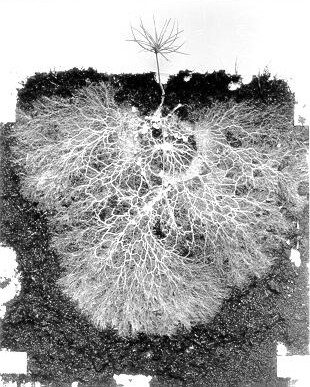
A major organism living just below the surface of our soil is a fungus called Mycorrhiza (Greek múkēs, meaning fungus, and rhíza, meaning roots), forming a symbiotic and normally mutualistic association with the roots of the host plants, in our case, the vines at Son Alegre. The Mycorrhiza fungi have been shown to be important or even essential for plant performance.
Mycorrhizae live on the roots of more than 80% of Earth’s plant species, including most herbs and flowers, grasses, cereals, legumes, trees, fruit and vegetable, ferns and mosses. The American plant pathologist, Stephen Wilhelm, is quoted as saying: ‘… in agricultural field conditions, plants do not, strictly speaking, have roots, they have mycorrhizae’.
Mycorrhizae are unable to produce their own nutrition which is why they attach themselves to the host plant and receive sugar or lipids from that plant in exchange for nutrients and water. This process, in turn, improves the growth of the host plant and favours rapid rooting.

The Mycorrhizae form a plant system with thousands of fine roots thinner than human hair, feeding the host plant in a mutually beneficial symbiosis with elements such as nitrogen, phosphorus and zinc, plus many other nutrients. The Mycorrhizae fungi also play a role in protecting the host plant roots from harmful diseases.
When water is abundant, the Mycorrhiza system stores water for release at a later stage when the host plant is stressed for moisture. The fine hairs (hyphae) that make up the body of the Mycorrhizae are able to get water and nutrients from the tiniest soil crevasses and deliver these to the host plant.
The Mycorrhizal fungi are said to have been around on earth for 450 million years or so.
Research confirms that Mycorrhizae are particularly important in mobilising mineral nutrients such as phosphorus, nitrogen, zinc, iron, calcium, magnesium, manganese, sulfur and other important soil sustenance by enzymatic release from tightly held chemical bonds and transporting them back to the plant. Crop plant uptake and utilisation of fertiliser inputs likewise becomes far more efficient, often leading to significant savings in fertiliser costs.

But Mycorrhizal benefits do not stop there. These fungi also play a definitive role in a plant’s natural defence against fungal root diseases such as Pytophthora, Fusarium, Phythium and Rhizoctonia.
Mycorrhizal fungi produce and release suppressive fluids such as antibiotics that inhibit infection by these and other fungal root pathogens. Studies have documented that Mycorrhizae also defend root systems by forming a physical barrier to deter invasion by soil pathogens.
We stated before on this blog that at Son Alegre we feel that we could not produce the grapes for our wine without the help of our friend, the Ladybird, or in the absence of a little help from our most valued collaborator, the common Ant. Well, we would be equally stranded, we fear, if it were not for the Mycorrhiza fungi. There, we’ve said it.
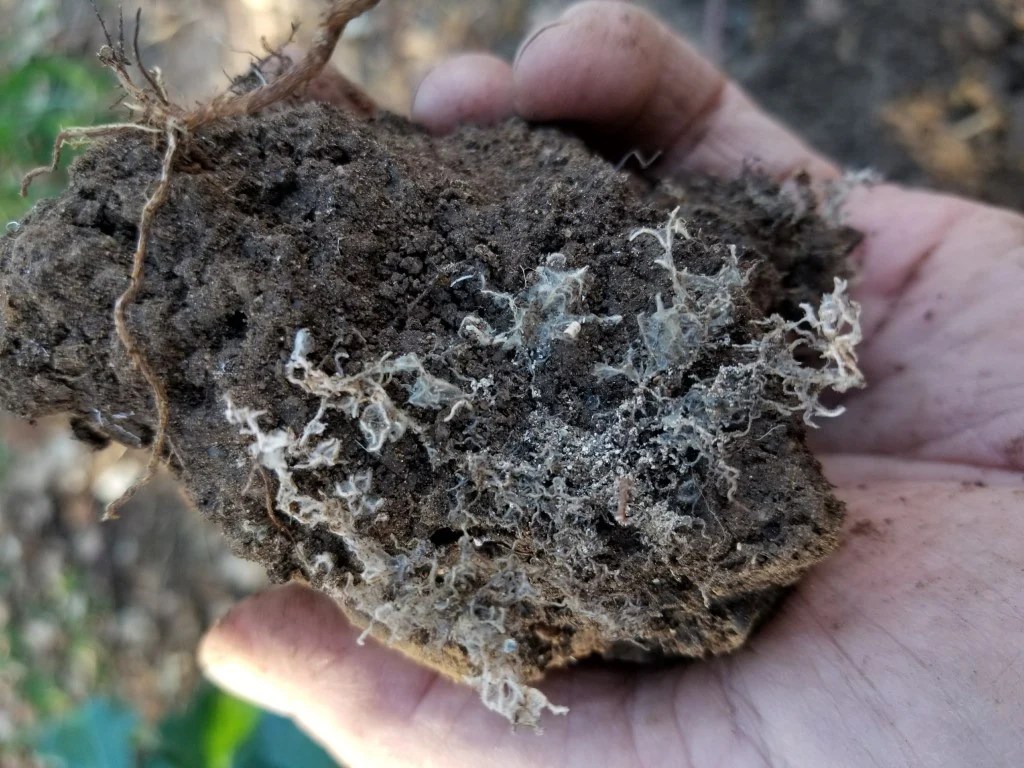
(Note: The photos and images in this blog entry were not taken on our own land but were borrowed from the Internet. Thank you.)
 Vineyard Son Alegre
Hi Klaus really nicely written, wonderful to know what happens under the earth! Today I did some more shots at the finca and will procees them tomorrow for you JOHN
LikeLike