Presenting A Perfect Gift From Nature

olives Son Alegre Mallorca

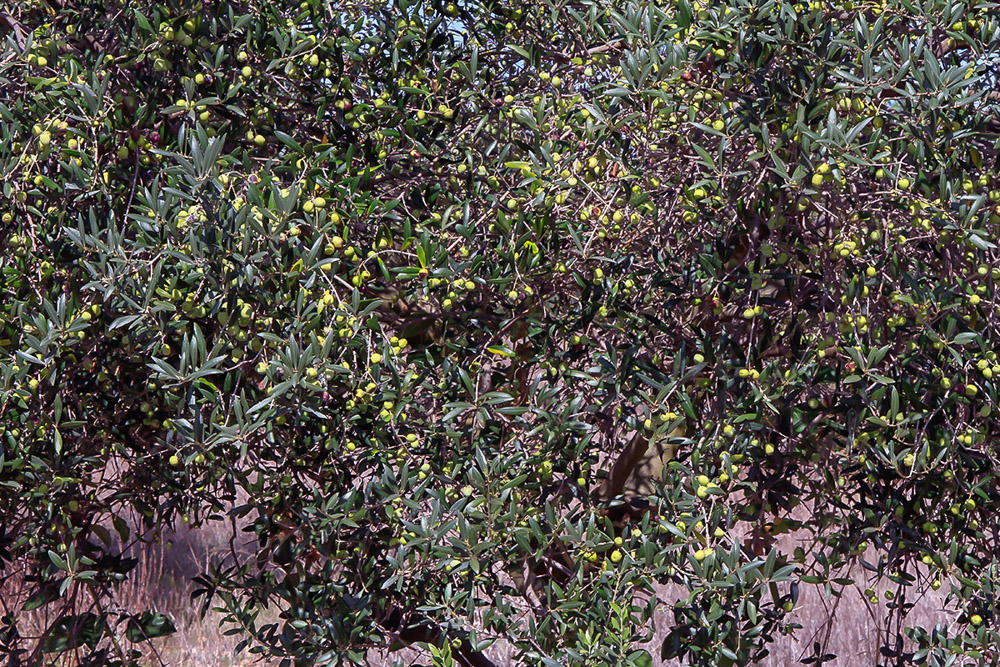
At Son Alegre we produce more than just wine. We are proud to say that in 2004 we planted over 1,000 olive trees of the Olea europaea species, bearing olives of the Arbequina variety. The Arbequina olive is considered to be one of the best in the world for consistency and productivity, as well as for the quality of its oil.

olives Son Alegre Santanyí Mallorca_

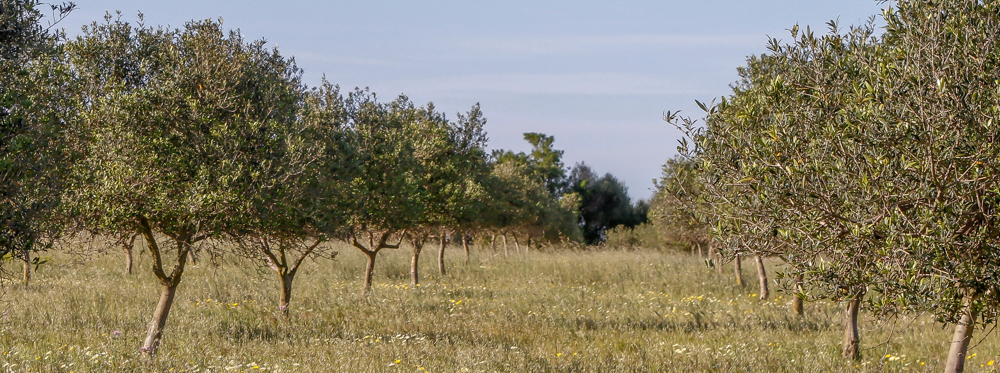
Our olive trees are cultivated under 100 % organic conditions on our Son Alegre estate near Santanyí, where the coastal hinterland joins the rolling hills of the Mallorcan Serra de Llevant.

olive trees Son Alegre Santanyí Mallorca 4

Our careful and sustainable agrarian approach follows biodynamic principles without the use of any chemicals or non-organic fertilisers, resulting in a low yield but rewarding us with truly exceptional quality. Due to climatic conditions in 2014, only 2,000 kg of olives could be harvested, resulting in a mere 216 l of olive oil (9.25 kg of olives are needed to produce one single litre of our olive oil). Luckily, all our efforts resulted in a premium product of exceptional character, albeit of a very limited quantity.

olives Son Alegre Santanyí Mallorca_2

We are always particular about collecting our olives just before they reach maturity. We handpick the fruit and, for maximum freshness, deliver the olives personally to the tafona (oil mill) in Sóller on the same day, just a few hours after they have been harvested. As we do not yet have our own oil mill, we collaborate with the Cooperativa Agrícola de Sant Bartomeu in Sóller, famed for their gentle handling of olives and renowned for their output of oil of the best quality.

olive trees Son Alegre Santanyí Mallorca 2

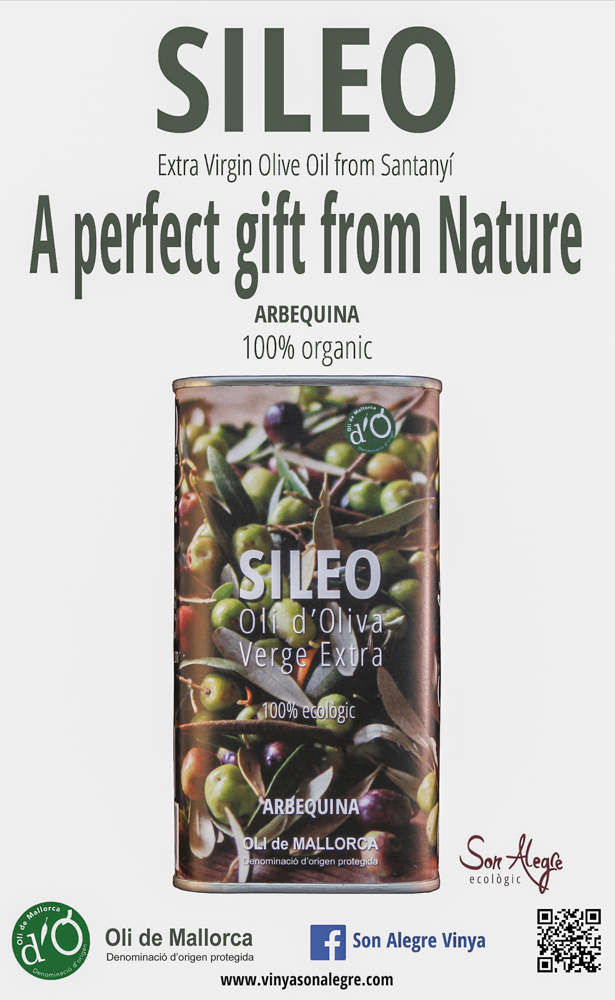
Our oil is extracted by a high-speed centrifugal process from the olives, without the use of any chemical agents. The result of this process is SILEO, an Extra Virgin Olive Oil (Oli d’oliva verge extra) of a truly superior, organic quality. For added stability we include a modicum of wild olives (Olea oleaster) at a ratio of less than 0.5 %, giving our oil a subtle tang and a truly lucious fragrance.

olive trees Son Alegre Santanyí Mallorca 3

Our olive tree plantation is scrutinized by the rigorous criteria of the Conselleria d’Agricultura, Medi Ambient i Territori as part of the Govern de les Illes Balears. The quality of our oil production is supervised by the Institut de Qualitat Agroalimentària de les Illes Balears (IQUA) and the Consell Regulador de la Denominació d’Origen Oli de Mallorca, allowing us to classify our oil as Oli de Mallorca Denominació d’Origen protegida.

Before bottling, our olive oil is tested by an ENAC-laboratory (Entidad Nacional de Acreditación). Our 2014 SILEO oil was measured with a degree of acidity of 0.5%.

SILEO Extra Virgin Olive Oil is known for its creamy and flawless yet delicately intense fragrance.

Sileo Extra Virgin Olive Oil Santanyí Mallorca_

This year, SILEO is sold in small tin cans of 250 ml. Only 1000 cans are coming to the shops this month; there aren’t any more. That’s the way Nature does it.

Looking At A Year With 13 Moons

moon phases

Mallorca is pretty much a community governed by the moon, in literature, poetry, culture, mysticism, mythology and, of course, in agricultural traditions. At least this is true for the olden days. In Mallorcan heraldry, the moon, or rather the half moon, can be found in many a coat of arms of Mallorcan families. Ramon Llull for instance had one half moon in his family heraldry, the Verí family has three half moons in theirs, the Berga family has five half moons, the Burgues clan even has a crest with 10 half moons.

The spectacle of the sky overwhelms me. I’m overwhelmed when I see, in an immense sky, the crescent of the moon, or the sun.

Joan Miró, artist (1893 – 1983)

Any normal year has 12 moon cycles, one for every month but, every now and then, there are exceptions. Occasionally, we get a blue moon, a 13th full moon, one month of the year with two full moons. 2015 is such a year with 13 moons. This year, we will see two full moons during the month of July (2nd and 31st).

At Son Alegre, we take the Lunar calendar or rather, the Lunar phases as a guide to our Nature-based approach to agriculture. We have always observed the Lunar cycles, just the way our ancestors have done when it came to the tending of their land or the breeding of their animals. One might say that, traditionally, the Mallorcan farmers’ lives were governed by the moon much more than the sun.

At Son Alegre, we have chosen to respect these proven traditions and thus, we approach agriculture by following the Lunar phases and the stars’ constellations. For better or for worse, we believe that the weather patterns are shaped by the moon, the wind and the elements. We act on our convictions by respecting Nature’s energy.

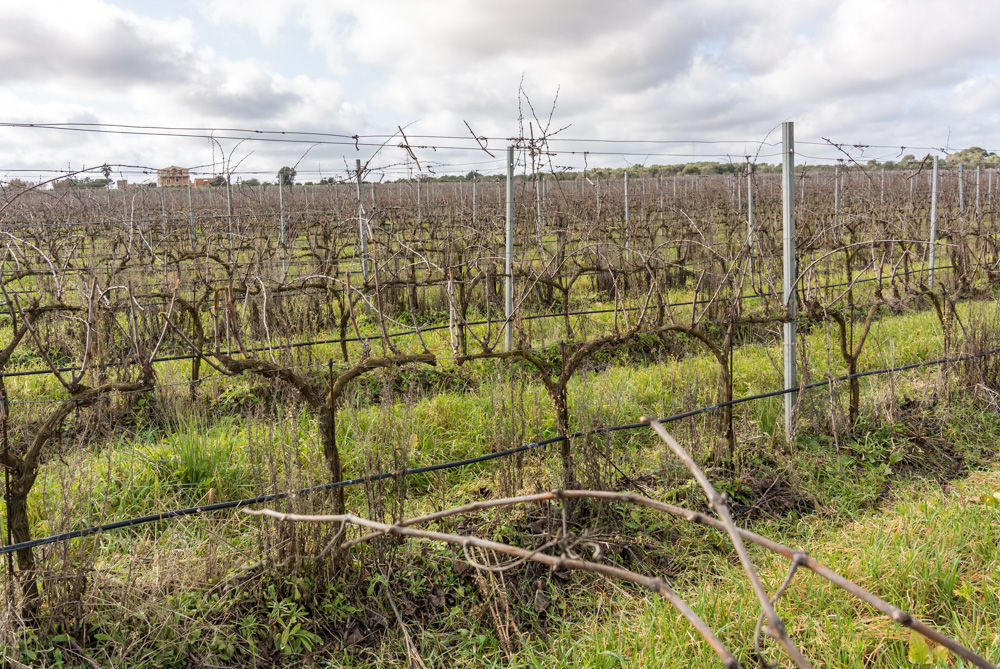
Traditionally, the grape harvest is related to the cycles of the moon. For instance, the fortnight between the New Moon and the Full Moon in January is the time to prune the previous year’s vines back to the woody-stemmed plant. Our vendimia, the grape harvest, usually starts with the New Moon in August. Ever since we started our activities at Son Alegre, we have been guided by the Lunar calendar and, so far, we have been rewarded with good results. It may not be perfect every year but it has so far always been true to the land.

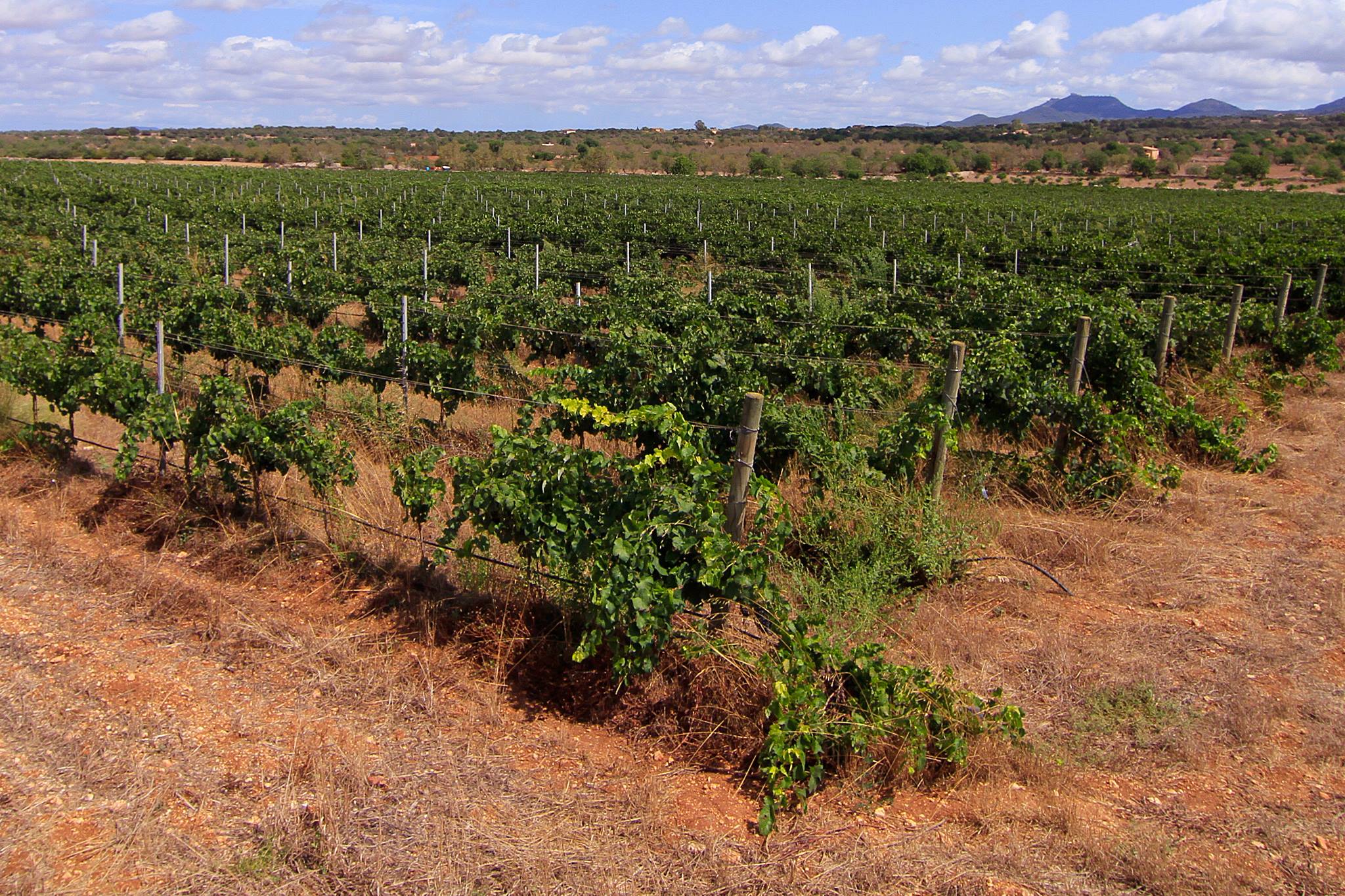
vines Son Alegre Mallorca

When it comes to wine making you might argue that all the wineries in Mallorca are working with the same components. Basically, they all work with the same grape varieties; the soil on which the vines grow can’t be all that different from one to another and surely, the climate should be the same on such a small island. And as far as the moon is concerned, clearly the same moon governs the south of the island as she does the west or the north. In a year with 13 moons, every single vineyard on the island should be influenced by this phenomenon just the same, shouldn’t it?

Well, think again.

It will surely all depend on what you deal with and then, how you deal with it all. For a start, the soil is not the same all over the island just as the geological composure is not the same throughout the island’s regions. Even within the same region, one can find soil formations which differ vastly from other ones across the street or round the corner. As for the climate, the wind or the weather, it all depends on where your land is situated, a bit higher up in altitude, a bit closer to the coast or the sea, south facing or not, in a sheltered valley perhaps or on the edge of a salt marsh. The components between one Mallorcan vineyard and the next can vary a hundredfold.

As for the question of how to deal with what you are given to start with, it all depends on your approach. You might elect to give up ploughing, as we have done, or refrain from fertilizing your land with commercial manure or compost like we do. You might aim for an organic way of producing your grapes or even set your sights on an approach by biodynamic principles as we do. We firmly believe that you get out of your land exactly what you give to it and we are convinced that Nature always knows best, at least in the long run.

raindrops Son Alegre Mallorca

We are proud of our work and we are grateful to Nature in general and to the moon in particular. If this year we have 13 reasons to be grateful for the moon’s cycles, we shall be happy to express our gratitude thirteen times. Thank you.

To Plough Or Not To Plough, That Is The Question

Son Alegre unploughed

When we first started our new vineyard we decided that we wanted to do things the right way. We had seen all around us how this island had changed over the last twenty or thirty years. How it was being treated as if there was no tomorrow and as if growth was the only option. Over the last 100 years or more, man has demanded more and more from our soil. We could not understand why everybody was participating in a race for more; more produce, more tourists, more income, more roads, more flights and more congestion. More of everything even though that would result in more stress and, ultimately, in a depletion of this island’s resources, whilst severely effecting the well-being of our children and of our grandchildren. This attitude might possibly endanger the future and the survival of Mallorca, this small paradise in the Mediterranean Sea.

We wanted to do our work in a responsible way and in a manner of sustainability. We wanted to stop depleting our resources, diminishing our natural assets and forever taking from our land. Instead, we wanted to start giving back to this island what it needed: health, dignity, repose and harmony. We decided that we would aim for an ecological balance on our land of give and take by aiming to keep our CO2 emissions as low as possible. We wanted to work the land as it had been a long time ago when our forefathers were in touch with nature and the elements and were respectful and grateful to the land that had nourished them and their ancestors. Our aim was to do things the organic way, even a bio-dynamic way which is an on-going opportunity to accommodate our fascination with the wonderful complexity of the natural world.

Olives_3

The land at Son Alegre had been ill-treated for so long. Years and years of ploughing with heavy tractors had effectively compacted the soil to a composition almost as hard as concrete. It was time to give the soil a bit of a rest.

Our land is composed of the Call Vermell soil, typical for many parts of Southeast Mallorca, a clay loam formation containing a high level of iron oxide and lime. This soil is interspersed with plenty of stones, characteristically preserving humidity a little bit longer than soil of a different makeup.

We started planting trees. First an olive grove (Olea europaea) and then an orchard of Algarrobos (Ceratonia siliqua, Carob trees). Since day one of our venture, we decided not to use any commercial fertilizers, be they chemical or natural, and we also decided not to plough the land. For us, to plough or not to plough was never the question. We knew that below the surface there was an active organism of life and natural nutrients that wanted to be left alone to be able to do their job; ants, worms, insects, amoebozoans and other little creatures, fungi and mycorrhiza. We knew that every time we upturned the soil by passing the plough over it, we would destroy and demolish the invisible structure that lay beneath the surface, a structure that we would need in order to nourish our land and our plants.

natural carob field

We started to plant our first vines. For one last time we had to use ploughing tractors to create the trenches where we would plant the rootstocks. After this, there would be no more ploughing. Yes, there are disadvantages to this way of gentle agriculture, drawbacks which would effect the soil. There is no doubt that ploughing aerates the land. If the soil is not aerated it might at times be deficient in water which would mean that we would have to irrigate the land whenever necessary. Luckily, Son Alegre has its own historic water source and the water is brought up by the use of solar panels, thus reducing carbon dioxide emissions.

Vinya Son Alegre Santanyi Mallorca_

The benefits of not ploughing the land are manifold. We neither disturb nor destroy the delicate composure of the living organisms (plants, animals and microbes) below the surface of our land. We do not diminish the nutrients which are being produced by the ecological partnership of ants, earthworms, minerals, nitrates, phosphates, fungi and mycorrhiza. Vegetative growth is stimulated and with it chlorophyll, in turn producing photosynthesis and thus, absorbing CO2. The policy of gentle intervention creates environmental peace and an equilibrium that attracts wildlife such as birds, insects, bees, butterflies and a multitude of creepy crawlers which in fact all help us decompose, nourish, fertilize and, of course, pollinate our vines and other plants. When we allow all living beings to exist underground in tranquility and balance they inadvertently help us and our work. Thus an environment is created which acts as a means of biological pest control, promoting biodiversity and generally benefitting the ecosystem and the biosphere in general.

son alegre_antholes

During the winter months, we also bring our sheep to graze the land between the rows of vines, helping to keep the ground cover at bay. At the same time the ruminants fertilize the land with their faeces, adding manure, essential elements and humus to the soil.

The more we honour the holistic interaction of our vine plants with the native flora, often mistakenly called weeds, and the influence of native insects, bugs and other tiny creatures, the more thriving and healthy our grapes will grow. In short, we simply allow nature to do its integrated and holistic task even if it may lead to smaller quantities of produce and a lower profit margin.

Our respect for Nature has so far given us good harvests. It may not always be perfect, but it is always in accordance with our sanity, health and peace of mind. We want our soil to remain of good use for future generations. We aim to give back to Nature what Nature has given us, forever more.

Nature is always the best.

Son Alegre sheep

Wishing You A Happy New Year

vinya

Happy New Year – Feliç Any Nou – Beatus Ianuariis – Gutes Neues Jahr – Bonan Novjaron – Bonne Année – Próspero Año Nuevo – Felice Anno Nuovo – Gelukkig Nieuwjaar – 年快樂 – Feliz Ano Novo – Gott Nytt År – Nollaig Chridheil Agus Bliadhna Mhath Yr – Godt Nytår – 明けましておめでとうございます – Mutlu Yıllar – Onnellista Uutta Vuotta – Nadolig Llawen a Blwyddyn Newydd Da – Blwyddyn Newydd Dda – с новым годом – Sretna Nova godina – Boldog Új Évet – سنة جديدة سعيدة  – Shona Bhliain Nua – שנה טובה ומבורכת – Hamingjusamur Nýtt Ár – புத்தாண்டு – E Ku Odun, Eku Iyedun – Շնորհավոր Նոր Տարի – Šťastný Nový Rok – 새해 복 많이 받으세요 – Urte Berri – සුභ නව වසරක් – Tau Hou hari – Godt Nyttår – ευτυχισμένο το νέο έτος.

Molts d’anys to all of you.

Illuminating The Common Grape Vine (Vitis vinifera)

vitis vinifera

Readers following this blog most likely know about wine because they are wine lovers. They are interested in the beverage of which the English novelist and poet, Thomas Love Peacock (1785-1866) said “The juice of the grape is the liquid quintessence of concentrated sunbeams”.

Naturally, we, at Son Alegre, are interested in the beverage, the sunbeams, the environment and, of course, in the plant that grows the grapes which makes our wines, the vine. Allow us to tell you everything you always wanted to know about the common grape vine (as quoted from Wikipedia).

Vitis vinifera (common grape vine) is a species of Vitis, native to the Mediterranean region, central Europe, and southwestern Asia, from Morocco and Portugal north to southern Germany and east to northern Iran. There are currently between 5,000 and 10,000 varieties of Vitis vinifera grapes though only a few are of commercial significance for wine and table grape production.

It is a liana growing to 35 yards tall, with flaky bark. The leaves are alternate, palmately lobed, 5–20 cm long and broad. The fruit is a berry, known as a grape; in the wild species it is 6 mm diameter and ripens dark purple to blackish with a pale wax bloom; in cultivated plants it is usually much larger, up to 3 cm long, and can be green, red, or purple (black). The species typically occurs in humid forests and streamsides.

The wild grape is often classified as V. vinifera subsp. sylvestris (in some classifications considered Vitis sylvestris), with V. vinifera subsp. vinifera restricted to cultivated forms. Domesticated vines have hermaphrodite flowers, but subsp. sylvestris is dioecious (male and female flowers on separate plants) and pollination is required for fruit to develop.

The grape is eaten fresh, processed to make wine, or dried to produce raisins. Cultivars of Vitis vinifera form the basis of the majority of wines produced around the world. All of the familiar wine varieties belong to Vitis vinifera, which is cultivated on every continent except for Antarctica, and in all the major wine regions of the world.

vinya son alegre

But there is more to this plant than that, much more. Allow us to quote from EOL, the Encyclopedia of Life.

Wild V. vinifera is one of the oldest fruit crops in the Old World. Seeds have been found at a late Neolithic site (4500 BCE) in Cyprus, at early Bronze Age sites at Jericho (around 3200 BCE), and at other ancient sites in the Levant. Viticulture, including wine production, occurred in Egypt at least as early as 2400 BCE, as recorded in the hieroglyphics of the time. It is uncertain where this grape was first domesticated – possibly in Armenia or along the eastern shores of the Mediterranean. The Romans brought the crop to temperate European countries, including Britain. It was brought to the New World by Christopher Columbus in 1492; Portuguese and Spanish explorers brought it to North and South America. It was later brought to the Atlantic Coast of North America by British, French, and Dutch settlers (some hybridization likely occurred between this species and the North American natives V. rotundifolia [Muscadine Grape] and V. labrusca).

Merlot

There are many other aspects to consider when it comes to understanding the vine plant, for example some medicinal applications (as quoted from Health from Nature).

Grape Vine has astringent, anti-inflammatory, detoxifying and anti-sclerotic properties. Seeds and leaves are astringent. Leaves have been used in traditional medicine to stop hemorrhages and minor bleeding. Ripe fruit can influence the kidneys, promoting urine flow. Along with a nourishing diet, grapes can greatly help people suffering from anemia and exhaustion. Grapes are also useful in cases of small-pox, neuralgia and insomnia.

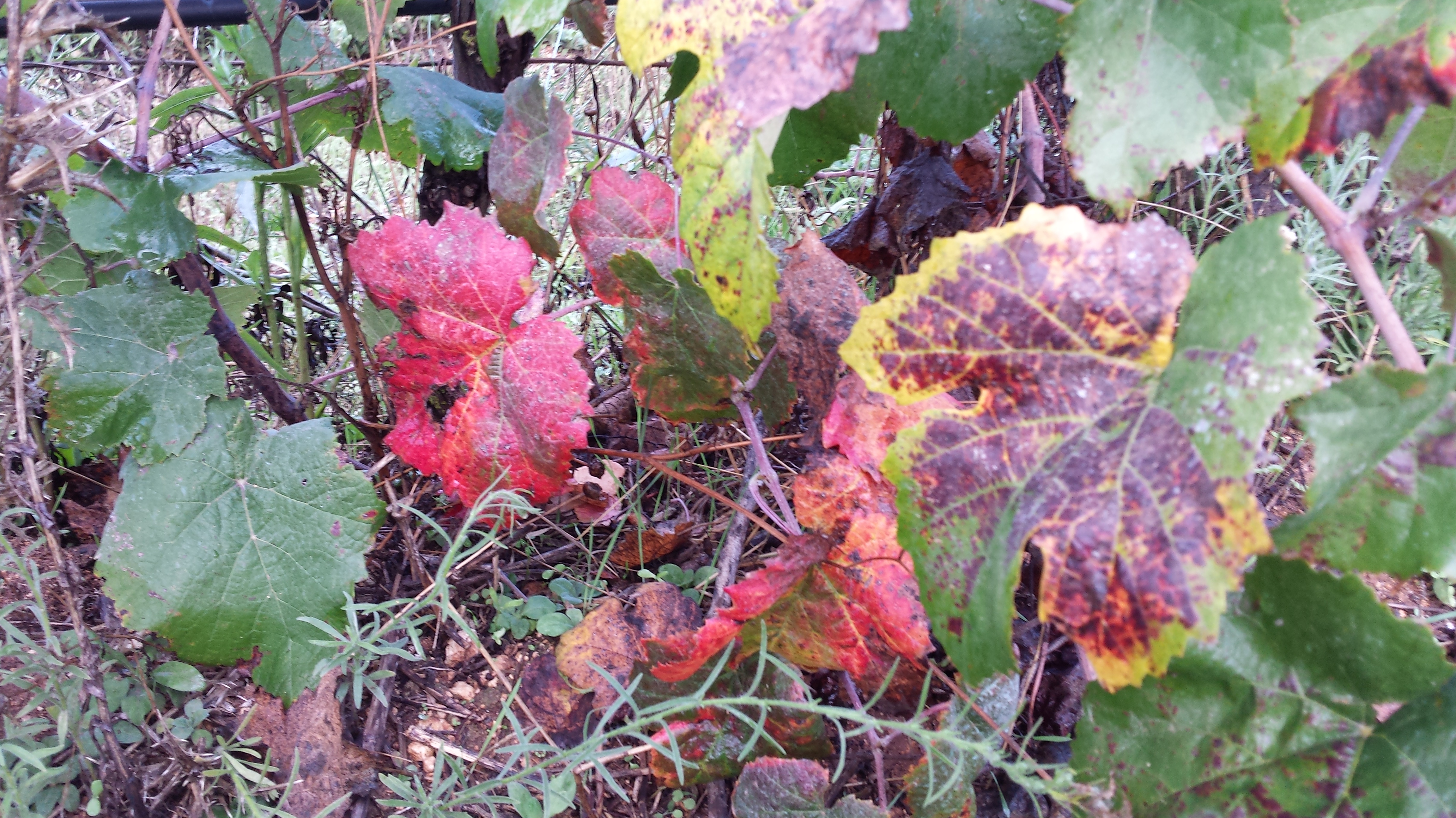
autumn leaves

There would be so much more to say about the vine plant, one could almost write a book about it. Maybe one day we will. In the meantime we are just busy tending to our land, our plants and our grapes because we know that you are mainly interested in what it is all about really, the wine. In vino veritas (In wine [there is the] truth).

Cheers.

Looking At The Amazing Mycorrhiza Fungi

Mycorrhizae fungi

The human race is a funny species. We generally tend to think that things that we don’t see can’t matter much. The invisible is not important to us, or so it seems.

When you drive through the Mallorcan countryside, or any countryside in fact anywhere in the world, you will see that farmers are busy working their land with heavy machinery, ploughing their land with tractors and tilling the soil as if there was no tomorrow. What many people don’t realize is that in doing so, the soil composure is likely to be broken up, the organic structure of the layers of soil is disturbed and sometimes destroyed and the microbial cosmos of the soil and subsoil, by and large invisible to the eye, is damaged, shocked, distressed and traumatized, and sometimes devastated beyond repair.

A major organism living just below the surface of our soil is a fungus called Mycorrhiza (Greek Mukes, meaning fungus and rhiza, roots), forming a symbiosis with the host plants, in our case, the vines at Son Alegre. The Mycorrhiza fungi has been shown to be important or even essential for plant performance. Mycorrhizae live on the roots of more than 80% of Earth’s plant species, including most herbs and flowers, grass, cereals, legumes, trees, fruit and vegetable, ferns and mosses. The American plant pathologist, Stephen Wilhelm, is quoted as saying: ‘… in agricultural field conditions, plants do not, strictly speaking, have roots, they have mycorrhizae’.

Mycorrhizae are unable to produce their own food which is why they attach themselves to the host plant and receive sugar from that plant in exchange for nutrients and water. This process, in turn, improves the growth of the host plant and favours rapid rooting.

The Mycorrhizae is a plant system with thousands of fine roots thinner than human hair, feeding the host plant in a mutually beneficial symbiosis with elements such as nitrogen, phosphorus, zinc plus many other nutrients. The Mycorrhizae fungi also play a role in protecting the host plant roots from harmful diseases.

When water is abundant, the Mycorrhiza system stores water for release at a later stage when the host plant is stressed for moisture. The fine hairs (hyphae) that make up the body of the Mycorrhiza are able to get water and nutrients from the tiniest soil crevasses and deliver these to the host plant.

Mycorrhiza-01

The Mycorrhizal fungi are said to have been around on earth for 450 million years or so.

Allow us to quote from a source that seems more expert than us in such matters (Acres USA):

Research confirms that Mycorrhizae are particularly important in mobilizing phosphorus, nitrogen, zinc, iron, calcium, magnesium, manganese, sulfur and other important soil nutrients by enzymatic release from tightly held chemical bonds and transporting them back to the plant. Crop plant uptake and utilization of fertilizer inputs likewise becomes far more efficient, often leading to significant savings in fertilizer costs.

But Mycorrhizal benefits do not stop there. These fungi also play a definitive role in a plant’s natural defense against fungal root diseases such as Pytophthora, Fusarium, Phythium and Rhizoctonia.

Mycorrhizal fungi produce and release suppressive exudates such as antibiotics that inhibit infection by these and other fungal root pathogens. Studies have documented that Mycorrhizae also defend root systems by forming a physical barrier to deter invasion by soil pathogens.

complete_mycorrhiza_1

We stated before on this blog that at Son Alegre we feel that we could not produce the grapes for our wine without the help of our friend, the Ladybird, or in the absence of a little help from our most valued collaborator, the common Ant. Well, we would be equally stranded, we fear, if it was not for the Mycorrhiza fungi. There, we’ve said it.

Read more about this amazing fungi here.

(Note: The photos and images in this blog entry were not taken on our own land but were borrowed from the Internet. Thank you.)

Nominating Our Employees Of The Month

son-alegre-ants-4

In life, one often tends to overlook the little things and yet, some of them can be of the utmost importance. Ants, for instance.

Ants are indispensable for the ecosystems. There are some 22,000 ant species known worldwide, it is said. We do not know how many of these one can find in Mallorca, but plenty there are if one bothers to look out for them. There are more ants on this island of Mallorca than humans, including the 12,000,000 plus visiting guests that Mallorca welcomes every year. A hundred times more. There may be more than that on our land alone, the Son Alegre finca.

son-alegre-ants-3

Ants form colonies that range in size from a few dozen predatory individuals living in small natural cavities to highly organised colonies that may occupy large territories and consist of millions of individuals. Larger colonies consist mostly of sterile, wingless females forming castes of “workers”, “soldiers”, or other specialised groups. Nearly all ant colonies also have some fertile males called “drones” and one or more fertile females called “queens”. The colonies sometimes are described as super-organisms because the ants appear to operate as a unified entity, collectively working together to support the colony.

(quoted from Wikipedia, thank you very much)

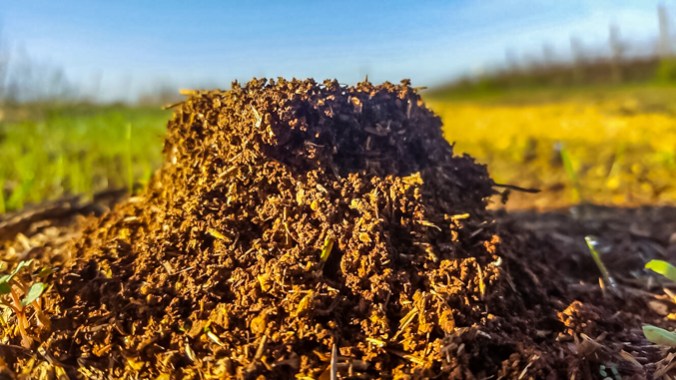
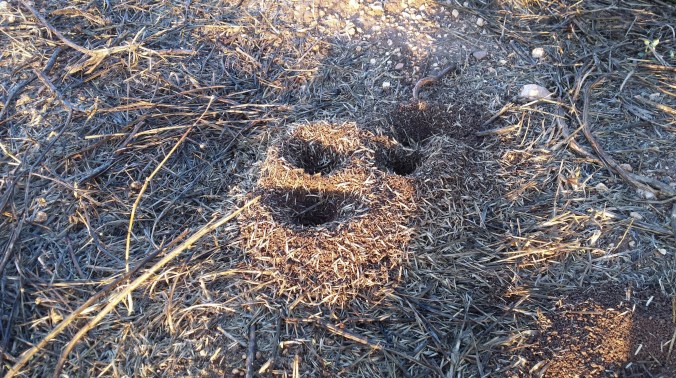
Our ants are working on our land day in and day out, all year long. Now, after this year’s grape harvest has been completed, they are coming out in force, building new nests and a plenitude of new mounds. Below the surface and far from the human eye, the ant colonies are very complex. There are some simple excavations of only a few tunnels and chambers, but there are also far more complex systems with many chambers of various sizes, and interconnecting tunnels. The environment within an ant nest is strictly controlled by the ants. They can open and close various entrances to provide more or less air circulation. The lower parts of the nest tend to be cooler and perhaps damper and ants will often move their brood from various parts of the nest if it gets too cool, too warm, wet or dry for the larvæ. This is why it is vitally important not to dig into an ant nest purely out of curiosity. We let our ants simply get on with their job of airing our soil and distributing organic matter to where it is most needed.

son-alegre-ants_01

Our motive is to let nature be undisturbed in the best possible way. The more we respect the holistic interaction of the microcosm of our vine plants with the native flora, often mistakenly called weeds, and their interaction with native insects, be that bees, ants, bugs or any other tiny creature, not to forget the Ladybird, the more thriving and healthy our grapes will grow. Nature always knows best.

Ants_Close up

Some interesting facts about ants you might be interested in:

  • Ants are extremely good at adapting to various climatic conditions as is evident by the fact that they are one of the longest surviving species. They have been around for the past 150 million years, and by the looks of it, seems like they are set for another 150 million!
  • Over 12000 known species of ants exist in the world. Experts conjecture that there are approximately 12000 species yet to be identified and named.
  • Ants are very intelligent beings. It is usual for humans to train animals, but in case of ants, it has been noticed that older ants train the younger ants in whatever task they are supposed to do. The only instance when an animal has been known to train another of its own kind!
  • A few species of ants have “trap-jaws” which can only be described as “super jaws”. These jaws can snap shut at tremendous speeds (records show 140mph!), in fact, the fasted amongst all animals. They use it as catapults, as well as to fling themselves in the backward direction.
  • Ants can run at amazing speeds. To give you an idea, if an ant was the size of a horse, it would be able to run as fast as a racehorse!
  • Some ants are given the job of looking after the queen’s eggs, and they do it diligently! Every morning these ants pick up the larvae and put them in the topmost chamber of the anthill to keep them warm, while every night they move them to the lowermost chamber so that they do not freeze!
  • When the queen ant flies off to start her own colony, she collects sperm from different males. She needs as many as 2 – 3 million sperms to start a new colony!
  • They are pretty colorful creatures. They appear in shades of green, red, and brown. Some species also exhibit blue and purple colors, while a few tropical ant species have a metallic shine.
  • Ants normally range from 2 to 7 mm in length. The carpenter ant is an exception to the rule, as it can stretch to 2 cm, or even an inch.
  • Adult ants are unable to swallow solid food. They depend on the juice they are able to squeeze out from pieces of food. This liquid food is also passed on to the larvæ.
  • Some worker ants are given the responsibility of guarding the queen. They act as the queen’s personal bodyguards.
  • One of the largest species of ant is the Giant Forest Ant (Camponotus gigas). The soldiers of this species grow as long as 28 – 30 mm. Also, the ants of this species engage in ritual battles which can continue for months!
  • An ant’s antenna is a multipurpose device. It can be used to touch things to know what they are, as well as to smell things!
  • So helpful are these creatures, that they eat for each other! Well, almost. They have two stomachs, one for themselves and the other to store food that they can share with other ants! They also have a tiny pocket in their mouths in which they can store food for other ants!
  • An ant has the largest brain amongst insects. It is said that the processing power of an ant’s brain and a Macintosh II computer might be similar.
  • It is the sting of the ant that is painful rather than the bite. Most ants have slightly venomous stings. Fire ants are most feared, because they have extremely venomous stings which can cause severe itching.
  • Ants are mostly omnivorous, that is, they eat other insects, seeds, oils and bread.
  • An ant can lift about 20 times its own body weight. But that is an average estimate. Some ants can even carry loads 50 times their body weight!
  • The life span of ants increases according to the hierarchy. Since the fertile males are at the lowest rung (their only job being that of providing sperm to the queen), they live only for a few weeks. Worker ants are a little higher up, so they live for 2 – 3 years. Queen ants live the longest, with a lifespan of almost 25 – 30 years!
  • Not all ant colonies have to have a queen. Some colonies function without one, while some others have more than one queen. If the queens do not think they can co-exist peacefully, one queen will leave the colony along with a few worker ants to start her own colony.
  • A Tropical Leafcutter ant uses its sharp outer jaw to cut leaves and make them into pulp. The pulp is later used to make fungus gardens. These gardens are looked after and harvested for food. So just to burst our bubble, we humans did not invent farming. Ants did it way before us.
  • Worker ants are further categorized into subsets based on the work they are allotted. Some are given the job of constructing the nest, some are given the responsibility of taking the rubbish from the nest and putting it into the rubbish dump, while some are supposed to teach the newer breed food gathering tactics.
  • Some ants (soldier ants) are given the task of guarding the nest, protecting it from predators, and warning the others about impending danger. These ants use the technique of vibrations to warn others. They will bang their heads against the walls of the nest, and the vibrations created because of the banging warn the others who are inside, about the approaching danger.
  • The soldier ants have modified heads to help them with their job. They can block the entrance to their colonies by putting their heads in them, and only allow their fellow worker ants to enter!
  • When a worker ant finds a source of food, it leaves a trail of scent to attract other ants in the colony to it. Since ants have poor vision, they rely heavily on this trail of scent to guide them to the food.
  • Leafcutter ants are threatened by a parasite which lays eggs in the crevices of their head. So what do they do when they go out? They carry smaller ants on their heads, whose only work is to fend off any attacks from this nasty parasite. Talk about looking out for each other!
  • Each colony of ants have their own unique smell. If an ant leaves it colony, it will lose the smell of that colony after a few days, and will be treated as an enemy if it returns after that. Any ant that does not have the smell of a colony will be treated as an enemy by that colony and attacked!
  • Leafcutter ants rank second only to humans, when it comes to forming intricate and huge societies. They can build 100 m wide nests in a matter of a few years! And they live in societies containing 8 – 10 million individuals.

(This information is quoted from www.buzzle.com. Thank you very much.)

We honestly don’t think we could run our land or our business without the good help of these little creatures, the ants, our little friends. Thank you all so much, little ants.

Illustrating The Son Alegre Grape Varieties

Monastrell

Last week, and just before the autumnal rains set in, we finished harvesting our grapes of this year’s crop. The way it looks, it has been a good year, it has to be said. At the moment, we grow six different grape varieties at Vinya Son Alegre, four red (blue) ones and two white (green) ones.

The image above shows the Monastrell grape, a Navy blue grape variety with a small and compact grain of a spherical shape, and with a distinct flavor. This grape was probably introduced to the Iberian Peninsula and Catalonia in particular by the Phoenicians around 500 BC. We use the Monastrell grape in our Sant Andreu Negre 2010 wine as well as in our Ca’n Sureda Petit Ropit Negre 2010.

Merlot

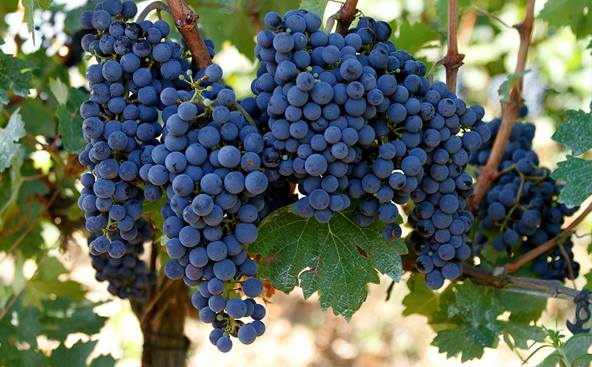
This grape is of the Merlot variety. The Merlot grape has a dark blue colour. The name Merlot is thought to be a diminutive of Merle noir, the French name for the Blackbird, probably in reference to the colour of the grape. The Merlot grape is used for our mono-varietal wines, Picarol Negre 2011 and Ca’n Sureda Merlot Negre 2010, as well as in our Picarol Rosat 2013 wine, our Es Pontàs Rosat 2013, our S’Antigor Negre 2012 (coming out soon) and our Ca’n Sureda Rosé Lucia 2012, which are all wines blended in combination with other grape varieties.

Syrah

This image shows the Syrah grape. The Syrah is a small-berried grape variety with a dark blue skin of an Indigo blue colour. The name Syrah originates from the areas of northern France. When it reaches perfect maturity, wine connoisseurs consider this grape as one of the greatest for wine. Perfect maturity is not easy to be reached with this grape. The Syrah grape is rather vulnerable; it can easily be harvested just a tad too soon or it will suffer when it is harvested a few days too late. We hope we have got it right this year; fingers crossed. We use this grape in our Sa Porta Murada Negre 2011 wine as well as in our Picarol Rosat 2013 and our Es Pontàs Rosat 2013 wines.

Cabernet Sauvignon

This image shows the Cabernet Sauvignon grape. Cabernet Sauvignon is a grape variety with a dark blue colour, almost Midnight blue, originating in the French region of Bordeaux. The plant is vigorous and well suited for warm climates with relatively low humidity. Cabernet Sauvignon is most widely distributed throughout the world among a diverse spectrum of climates. The Cabernet Sauvignon grape is used in our Picarol Rosat 2013 and our Es Pontàs Rosat 2013 wines, as well as in our S’Antigor Negre 2012 and our Ca’n Sureda Rosé Lucia 2012 wines.

We are preparing to plant vines of the Callet grape variety early next year, an indigenous grape variety of Mallorca and in particular of the Felanitx and Santanyí region. We will show you photos of the Callet grape as soon as it will be grown and ripened, probably not before 2016. Patience and victory are twin brothers, for victory comes with patience.

Malvasía

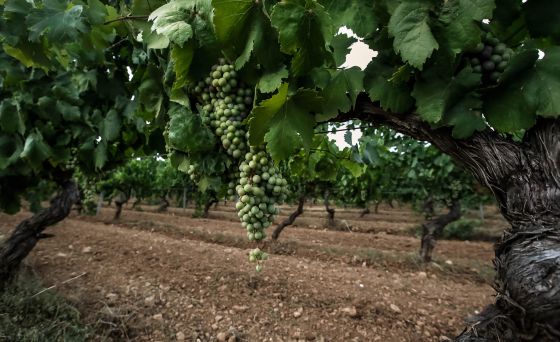
This photo shows the Malvasía grape. Our Malvasía grape is the Balearic variety of a green grape historically used to make dessert wine due to the presence of some residual sugar. The Malvasía grape is said to be of ancient Greek origin. There is also a red Malvasía negra grape variety but we do not grow that one (yet). We use the Malvasía grape for our Picarol Blanc 2013 and our Es Pontàs Blanc 2013 wines, as well as our Ca’n Sureda Blancs 2012.

Chardonnay

The image above shows the Chardonnay grape. Chardonnay is a green grape variety with origins in the Burgundy region of eastern France, giving the wine a medium to light body. The grape is small and round and acquires a melon tone when fermented. The Chardonnay grape is used in our Picarol Blanc 2013 and our Es Pontàs Blanc 2013 wines, as well as our Ca’n Sureda Blancs 2012.

Earlier this year, we planted vines of two more green grape varieties, the Giró ros grape, another autochthonous grape variety of Mallorca as well as the Viognier, a white grape originating in the Rhine valley, especially in the department of Rhone (France). We will be able to show you photos of these two grapes in the autumn of 2015. The vines are doing well at the moment; the have taken root and are doing fine, but the grapes have not developed yet.

All photos shown above were taken by our friend and collaborator, John Hinde, as were in fact most of the photos used on this blog. Thank you, John.

The texts of this blog have so far always been written by Klaus Fabricius, just in case you wanted to know.

Picking The Merlot Grapes

Merlot

For the last two days, we have been busy picking our Merlot grapes at Vinya Son Alegre. This is a blue grape variety. Wine made from the Merlot grape is characterized by its fineness and softness while being aromatic and almost meaty. The Merlot grape comes with a cylindrical bunch of small, sparse berries. Their grain is small and thick-skinned, with a blue-black color, and the pulp is sweet. This grape belongs to the same family as the Cabernet Sauvignon variety. Today I will leave you with a picture where you can see how the Merlot grapes are being selected before going to be pressed.

Merlot selection

A Boom of Vineyards, Wines and Wineries

The following article was written by Andreu Manresa, a friend of mine from Felanitx, and published in La Crónica de Baleares, El País Cataluña, July 20th, 2014. © All rights remain with EDICIONES EL PAÍS S.L.

Boom de viñas, vinos y bodegas. La ola vitivinícola se agiganta en Mallorca gracias al capital internacional, de mayoría alemán, y los buenos réditos del turismo.

Tolo Ramon_El País

Ocurre un boom vitivinícola. En Mallorca se hacen nuevas plantaciones de viñedo, algunas enormes para la escala tradicional. Hay cultivos en los que no se alcanzan a ver sus límites. Los de la payesía del XX son dispersos, trozos, porciones aquí y allá. Era la estrategia defensiva de pequeños propietarios temerosos por la ruina de sus abuelos con la filoxera.

Aparecen ahora cientos de vinos de etiquetas de bodegueros o gente ajenos a la tierra. La nueva tendencia se constata en la construcción de más bodegas, hasta más allá de las 70 registradas.

El capital internacional – alemán – y el turístico fluyen hacia ese teórico negocio que da prestigio y ego pero que requiere inversión, ojo, tino, años y suerte en las cosechas. Un magnate de la cosmética, Andrea Schwarzkopf, posee una gran finca y celler en Pollença, can Axartell, de cuatro plantas soterradas en una cantera de yeso. Son seis millones invertidos en la obra.

Alrededor del corazón de Binissalem surgen más lagares foráneos: en son Juliana, Ana Vins; en Son Artigues, en Porreres, el alemán Marc Gayda cosecha vinos. Los Castell Miquel de Alaró son de Michael Popp, de Binorica, que se hizo con la finca sa Canova de la ex Sa Nostra. El dueño de la cadena de perfumerías y del golf de Canyamel, Erwin Franz Müller, produce caldos en Capdepera y los vende. En Banyalbufar se da el milagro de tres microbodegas de la malvasía resucitada.

Clásicos y familiares son los Mollet-Montenegro de Sunyer y la factoría Binigrau de Sencelles. En Felanitx, Armero y Vidauba exhiben sus retos, como Miquel Oliver, de Petra, los dos Gelabert de Manacor, los dos Galmés de centro insular, Jaume de Puntiró, los Butxet, son Prim, Pastor, son Puig, son Bordils, los Mortitx y Vidalet… dispersos y distintos todos, algunos con fondos colectivos.

El señorío lo proclama OM de Algaida, diferente de la matriz de can Ribas de Consell, los Nadal o los rústicos de can Majoral. Las redes y el capital de sus distribuidoras de cervezas y licores dan vida a los lagares enormes de Tianna Negra de Morey, en Binissalem, y Sa Rota de los Bordoy, en Llucmajor.

La pequeña Alemania está en Es Fangar, capitalismo cerrado de producción ecológica de Peter Eisenmann, que gasta otros 6 millones en una bodega, alejada del latifundio de 1.000 hectáreas, de las que 64 son de viña.

La cabecera de las plantaciones alemanas con bodega es Binigual, del fallecido potentado Klaus Graff que creó Teka y Puerto Portals y confió a los jóvenes roqueros de Ànima Negra (AN) el dar personalidad a sus vinos. El fenómeno de AN de Miquel Àngel Cerdà y cía. se explicará por el triunfo de otro vino, el del terroir —con la fachada de las etiquetas de Barceló— y su capacidad de generar emuladores. Una secuela exitosa es la bodega de 4 Kilos, la escisión del enólogo Xesc Grimalt, que no ara las viñas y deja que las raíces de las hierbas aireen el suelo y compitan con las de las cepas. 4K lanza vídeos estrafalarios y buenos productos enigmáticos.

La nueva ola del vino no es secreta. Hay movimientos de terrenos que cambian cuadrículas enteras de la geografía y del mapa en el satélite. Así nació y se duplica la viña gigante en sa Bassa Plana, de los hermanos Miguel y Toni Pascual, de Binissalem, que hicieron su fortuna sirviendo copas a alemanes y poseen la cadena hotelera Pabisa. En Cala Pi, área protegida, tienen ciervos, desforestan garriga, trituran piedras y rellenan su nuevo paisaje de vides.

En Santa Maria, los hijos americanos de Andreu Gelabert, del hotel de Sóller, tienen vinos Ángel, y los de son Ramon, en Llubí- Muro, son de Ramis, de Grupotel. En Santa Catarina, de Andratx, persiste la bodega creada en 1985 por un millonario sueco.

La bodega Macià Batle – valorada en 20 millones -, con un millón de botellas al año y Ramon Servalls al frente, sigue en manos de Sebastián Rubí tras vender un hotel. Otros megaproductores son Pere Seda, de Manacor, y José Luis Roses Ferrer, de Binissalem, los exFranja Roja, con 80 hectáreas y 700.000 botellas. Mallorca da seis millones de litros año.

Solitaria y vehemente, Bàrbara Mesquida Mora estrena su nueva bodega en cuarta generación en Porreres con otra marca, vinos biodinámicos, estéticos y literarios. Aumenta la escritura a rayas de la isla con el orden de los viñedos. Al sol del estío, las vides ofrecen uno de los escasos verdes que resisten vivos.

Harvesting Some Blue Grapes

Cabernet Sauvignon_1

All week this week, we have been busy at our Son Alegre finca harvesting our grapes. On Monday and Tuesday, we were busy harvesting our Malvasía grapes. Wednesday, it was time for our Chardonnay grapes, and yesterday we were busy harvesting our blue Cabernet Sauvignon grapes. The Cabernet Sauvignon grape is of a medium size; it is of an irregular shape and not very compact. Its grains are small and spherical, and filled with quite a few seeds. The skin is thick and hard, making the grapes resistant to diseases, and the grape has a deep blue colour. The grapes’ flesh is firm and crisp wit a slightly acidy taste. We use this grape together with our Merlot and Syrah grapes to blend our fantastic rosé wines. Cheers.

Cabernet Sauvignon_2

Introducing The Chardonnay Grape

Son Alegre Chardonnay

The Chardonnay grape is widely distributed amongst Mallorca’s vineyards. This grape variety is probably the world’s most popular white wine grape and it is grown in virtually every wine-producing region. Even though this white grape is not autochthonous to Mallorca, it was certainly grown here successfully in 1870-80 when the Austrian Archduke Luis Salvator wrote his treatise, Die Balearen, listing the Chardonnay grape together with 38 other grape varieties grown here in the Illes Balears.

Son Alegre Malvasía

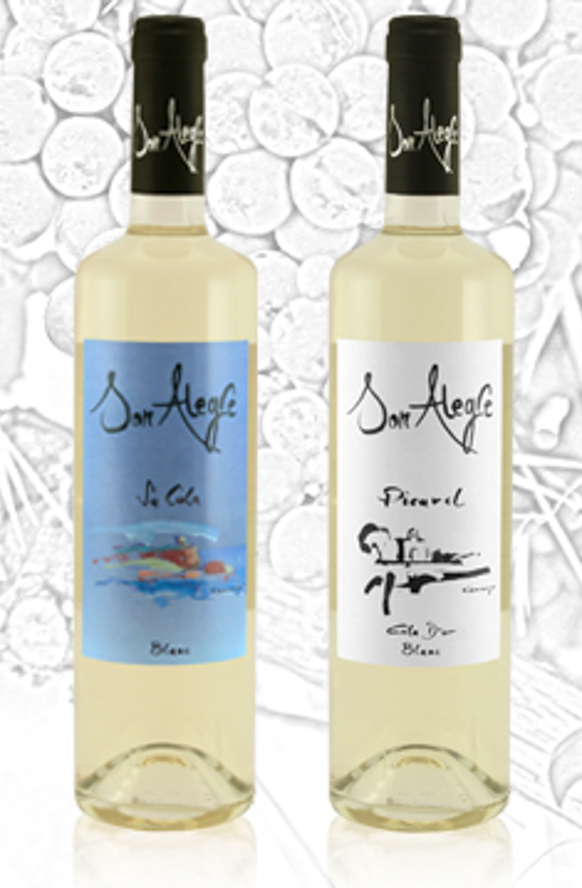
The Chardonnay grape in general produces wines which are dry to medium dry with pear, apple, tropical or citrus fruit flavours. When little to no oak aging occurs, Chardonnay tends to be more crisp and fresh. With extensive oak aging, the wines become creamy and buttery with vanilla, spice and oak flavors. Our two Son Alegre white wines, Sa Cala and Picarol Blanc, are made with Chardonnay and Malvasía grapes. Both wines are fresh and refined, in perfect balance of acidity, alcohol and fruity expression; they were not aged in oak barrels.